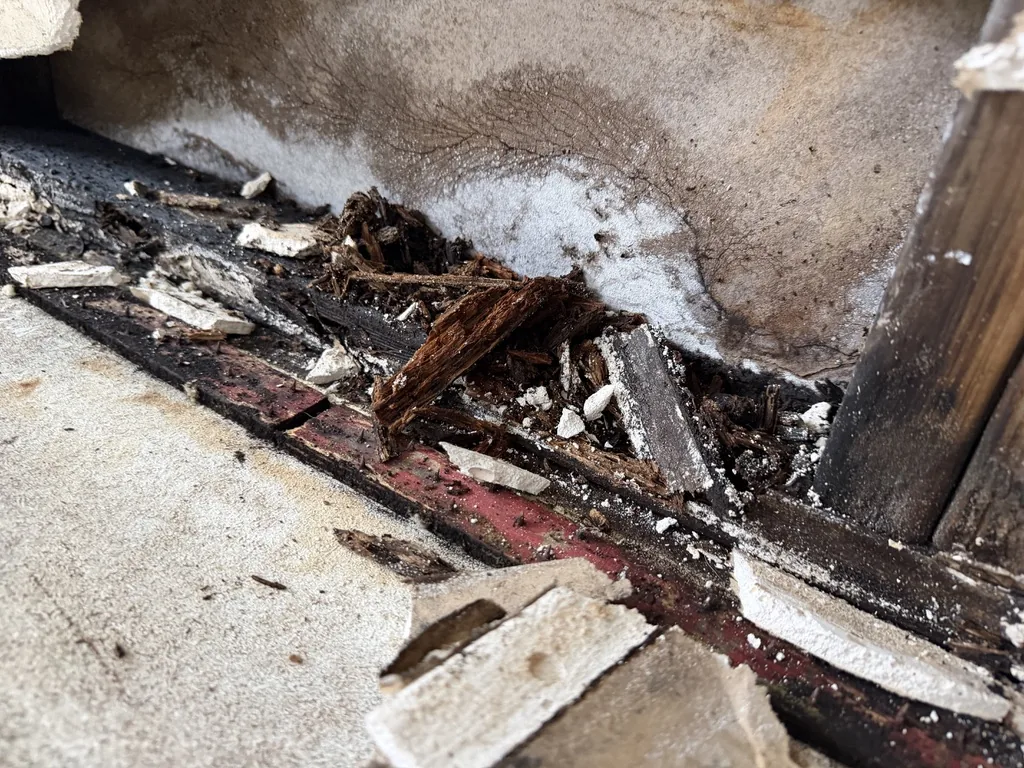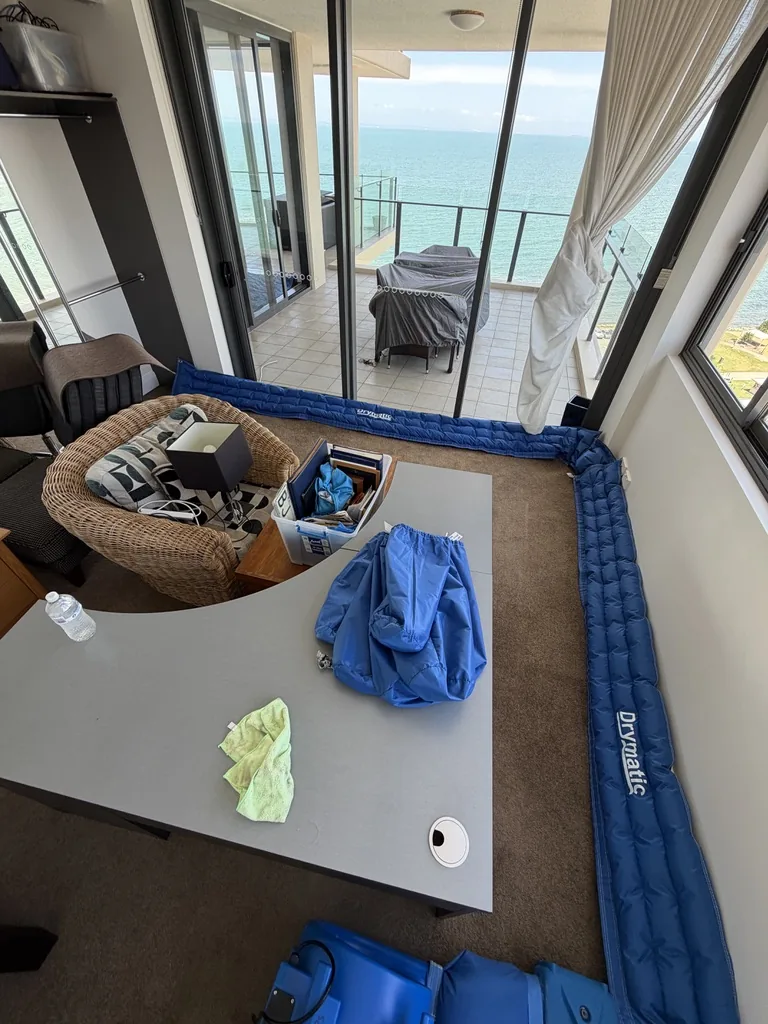
Water damage is a race against the clock. Within hours it soaks into skirting, plaster and subfloor; within 24–48 hours the conditions for mould are already forming. What you do in that first window makes the difference between drying a room and rebuilding it.
1. Make it safe first
If water is anywhere near power points or the switchboard, do not enter — turn the power off at the main only if it is safe to do so, and call a professional. Standing water can hide electrical and structural hazards. Your safety comes before any belongings.
2. Stop the source
A burst flexi-hose or a failed hot-water system will keep filling the room until the water is turned off at the mains. If it is storm water coming in, focus on diverting and containing rather than chasing it.
3. Extract, don’t just mop
Surface water is only part of the problem — most of it migrates into cavities, underlay and the slab where a mop can’t reach. Professional extraction pulls the bulk of the water out fast, which is the single biggest thing that shortens drying time.
4. Document everything for your insurer
Photograph the damage before anything is moved or dried, and keep a note of the cause and timeline. Moisture readings, thermal images and drying logs are what a major Australian insurer expects to see — and they protect you if the claim is questioned.
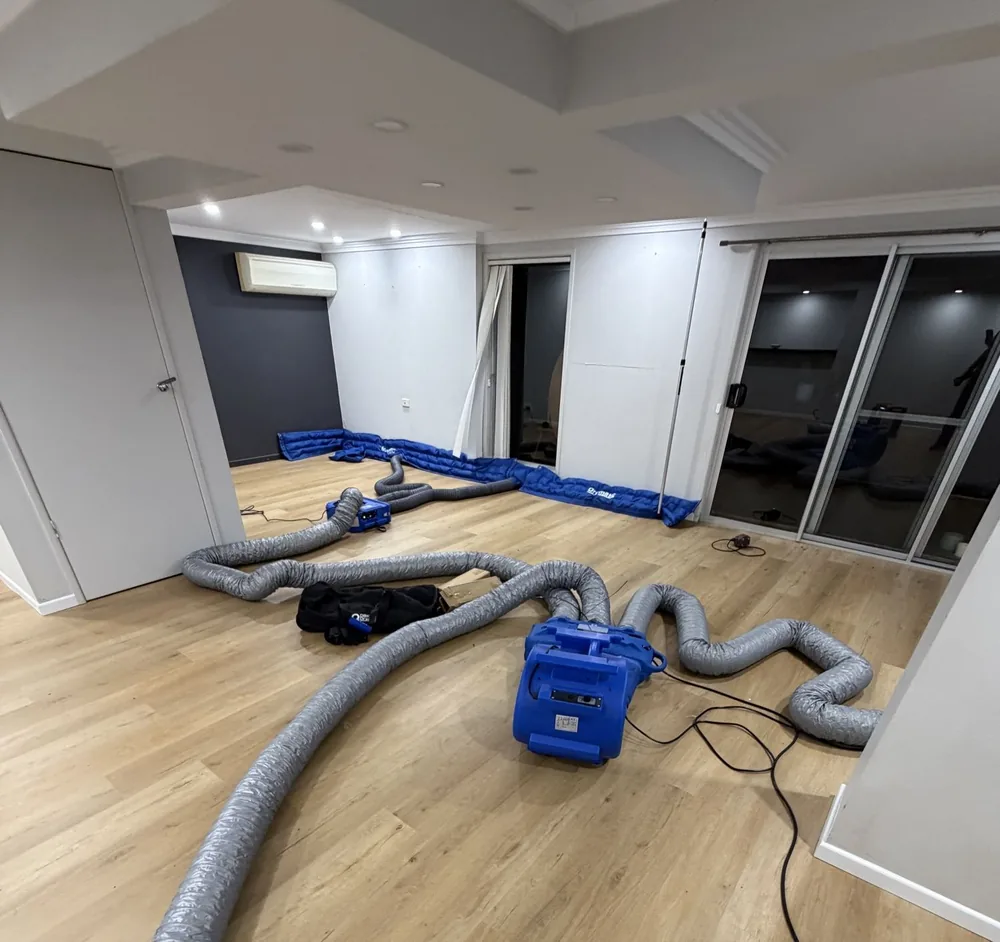
5. Dry the structure properly
Fans and a dehumidifier from the hardware store dry the surface, not the structure. Trapped moisture under waterproof flooring or inside a wall cavity keeps feeding mould long after the carpet feels dry. Drying is finished when the meters say so — not when it looks dry.
If you are in the middle of a water event now, the honest advice is: make it safe, stop the source, and call someone who can extract and monitor properly. The first 48 hours don’t come back.
General information only — every property is different, and nothing here replaces a professional, on-site assessment.