Water · Category — how contaminated: 1 Clean · 2 Grey · 3 Black (grossly contaminated)
Water · Class — how much to dry: 1 part of a room · 2 whole room, water up walls under 24" · 3 saturated from overhead, up walls over 24" · 4 specialty — hardwood, plaster, masonry, bound-in moisture
Mould · Condition: 1 normal · 2 settled spores · 3 active growth
- Location
- Redcliffe — waterfront apartment, Moreton Bay
- Event
- Severe Brisbane storm — wind-driven rain
- Water path
- In through the windows & door frames
- Response
- Same day — fast property-manager call-out
- Our scope
- Emergency water extraction & in-place structural drying
- Outcome
- ~$30,000 timber floor saved · no mould
When a severe storm rolls across Brisbane, the damage isn’t always the roof or the yard. At a waterfront apartment in Redcliffe, wind-driven rain was pushed straight in through the window and door frames — and onto an expensive timber floor. What happened next is the whole point of this story: because everyone moved fast, that floor is still there.
The clock starts the second water gets in
Water damage is a race. The longer water sits in a timber floor, a wall cavity or the subfloor, the more it soaks in — and the more likely you are to lose the material entirely and grow mould on top of it. Timber floors are especially unforgiving: leave them wet and they cup, swell and lift, and what should have been a dry-out becomes a full replacement.
On this job the property manager did exactly the right thing — they didn’t wait to “see how it dries out”. They called it in straight away, and we were on site the same day to start extraction while the timber still had a fighting chance.
Extract first, then dry hard
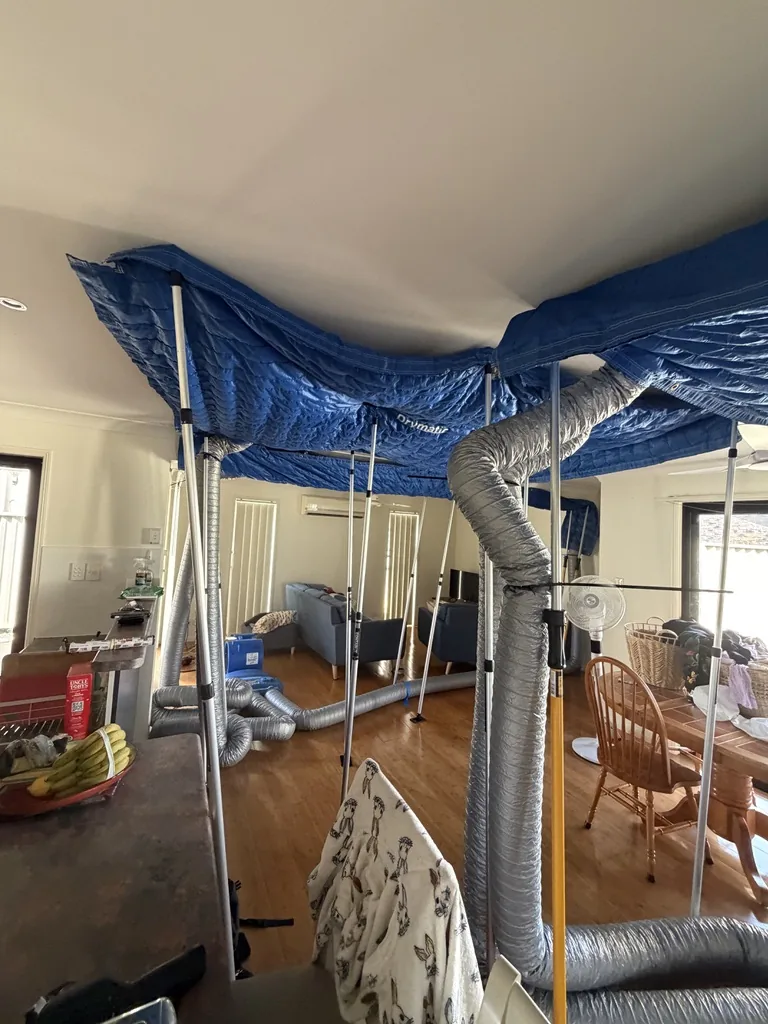
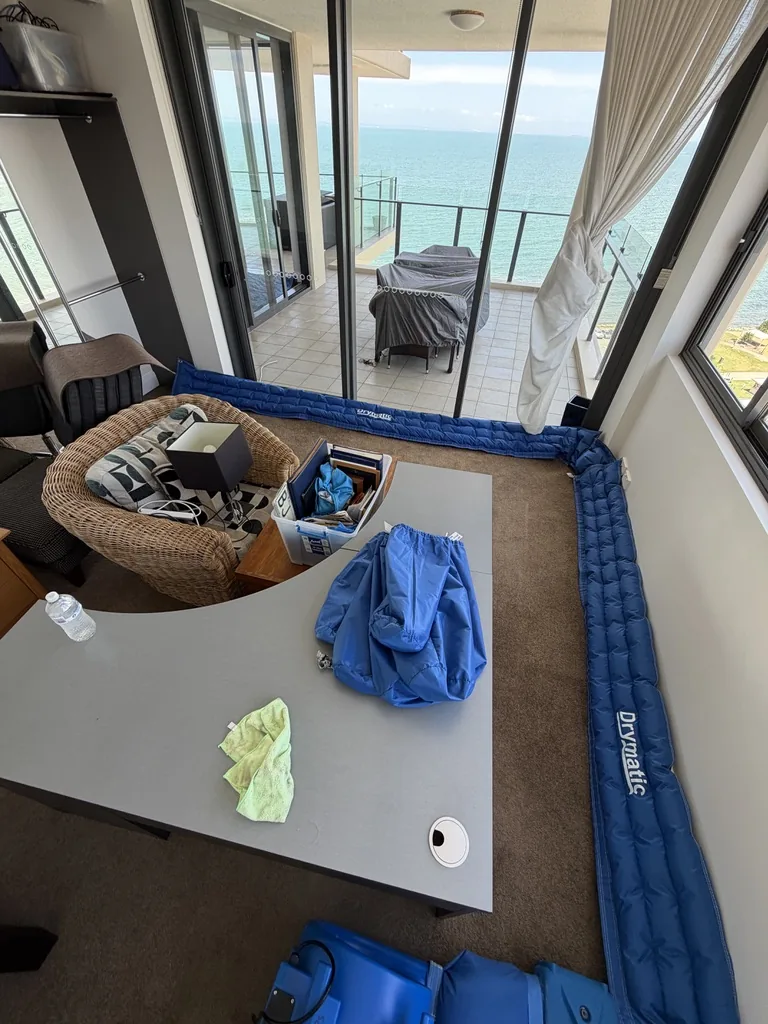
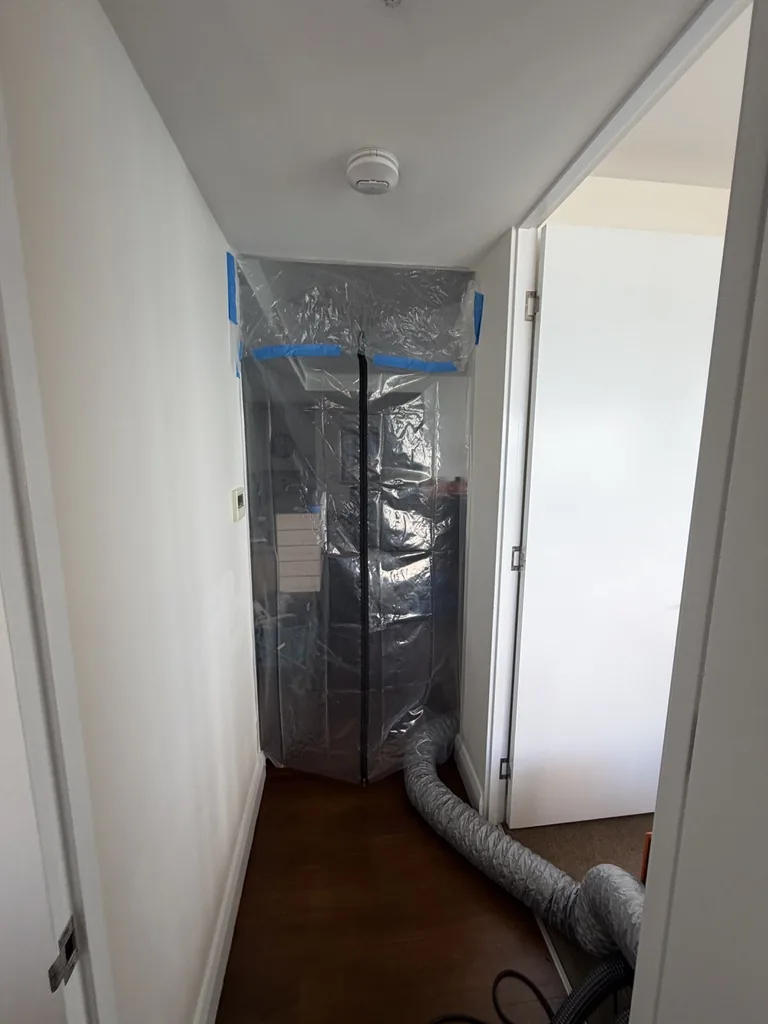
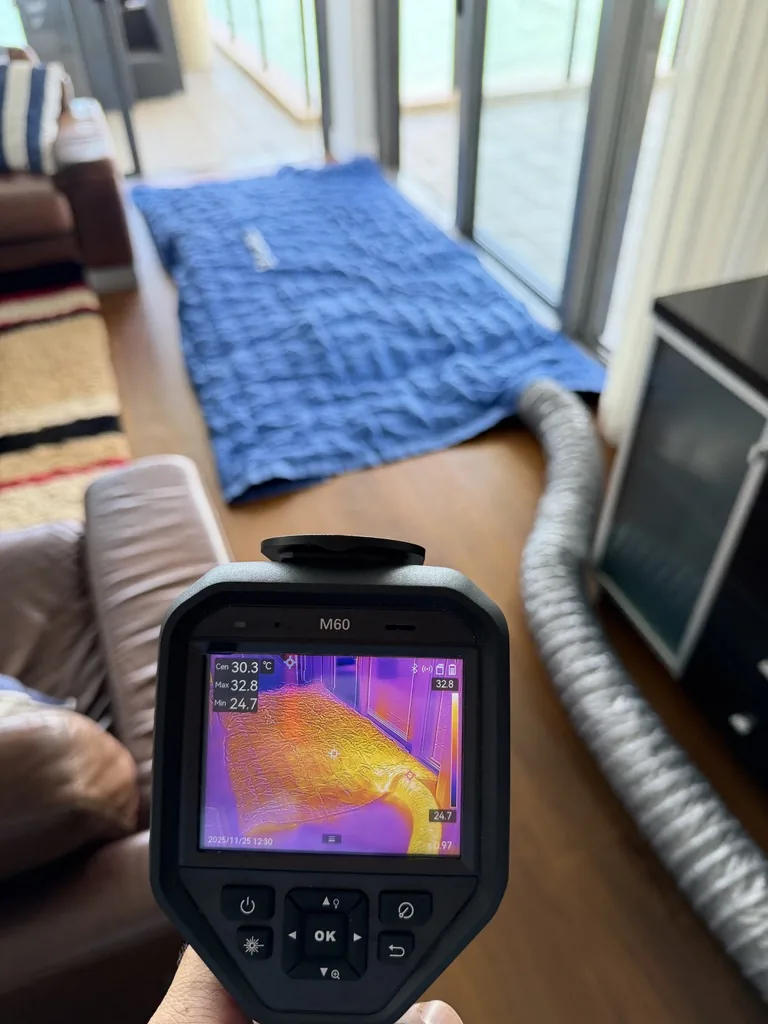
The first job is to physically remove as much water as possible — you never rely on air movers to do what extraction should. From there we set up a controlled drying system: heat-drying mats laid directly over the affected timber, air movement across the surface, and containment to keep the drying zone sealed and efficient.
The goal isn’t to blast it dry as fast as possible. Push timber too hard and you simply trade water damage for heat damage — warping, cupping and splitting. So this floor was dried deliberately and evenly, at a controlled pace, to pull the moisture out without causing the very secondary damage we were there to prevent.
We can see the water you can’t
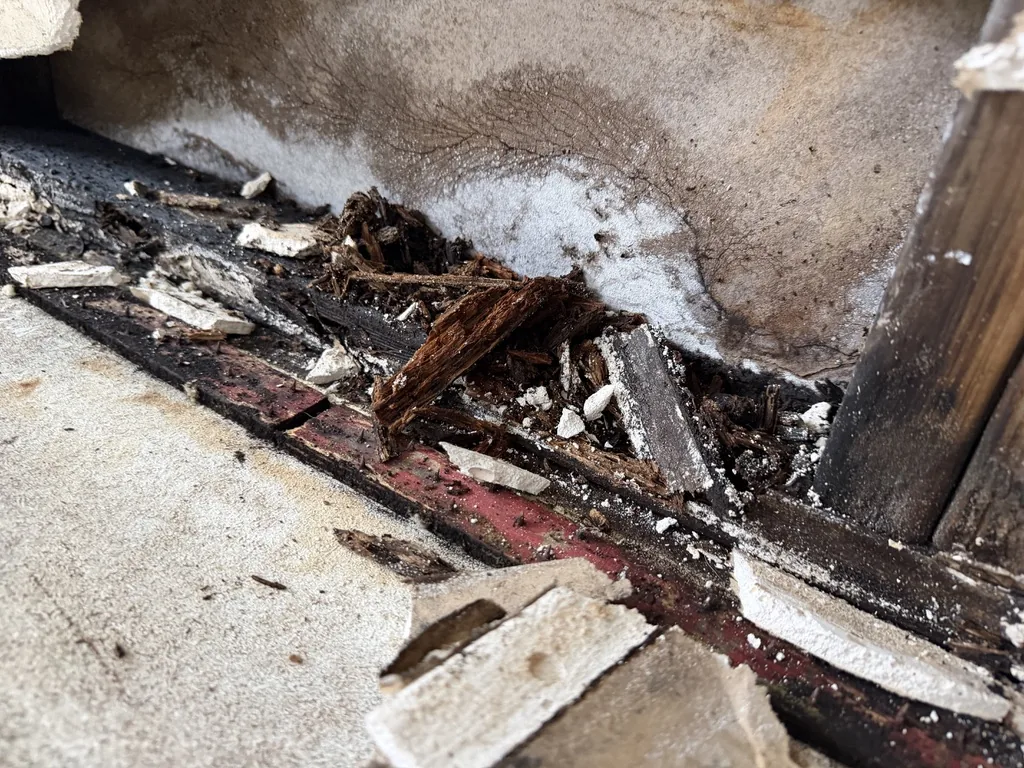
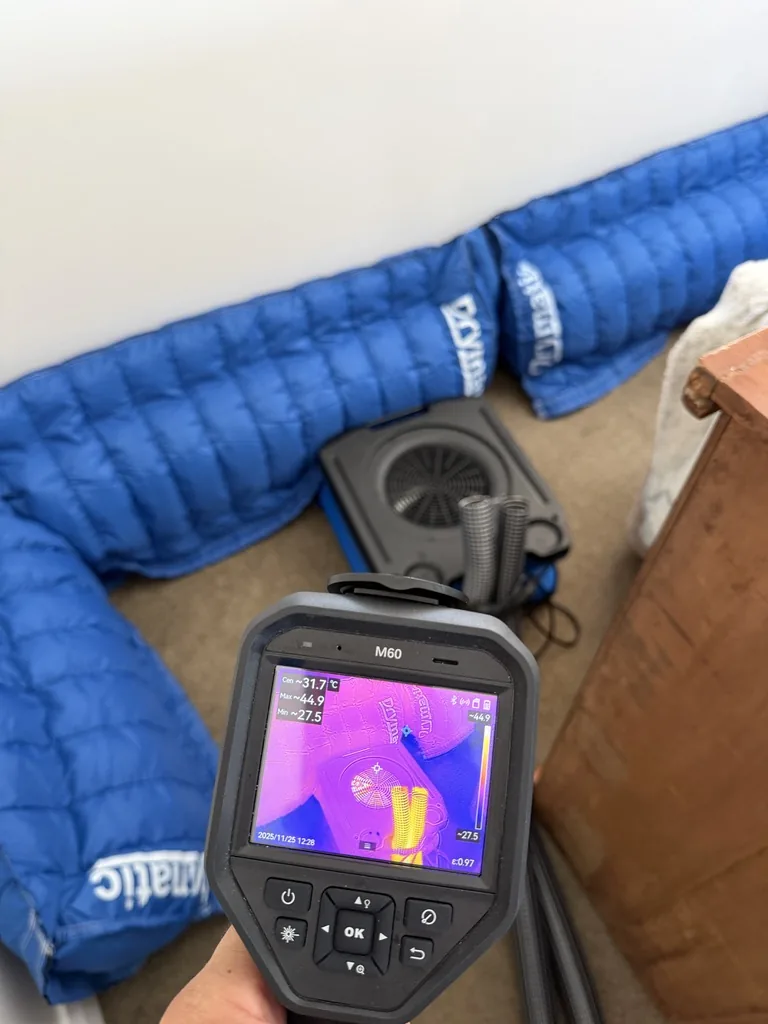
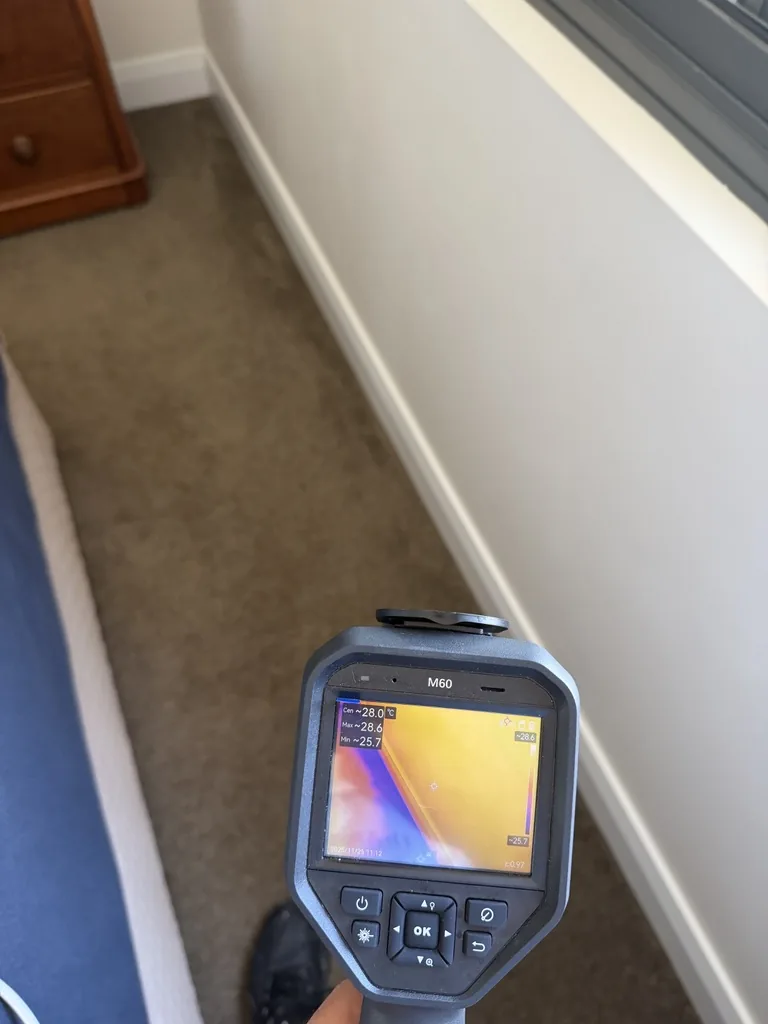
The trap with water damage is that the surface can feel dry while the structure underneath is still soaked. That’s where thermal imaging earns its keep. The cool patches on the camera show exactly where moisture is still sitting — behind the skirting, under the floor, at the edges of the room — so we dry the areas that are actually wet, and just as importantly, we can prove when they’re genuinely dry.
Saving a $30,000 floor
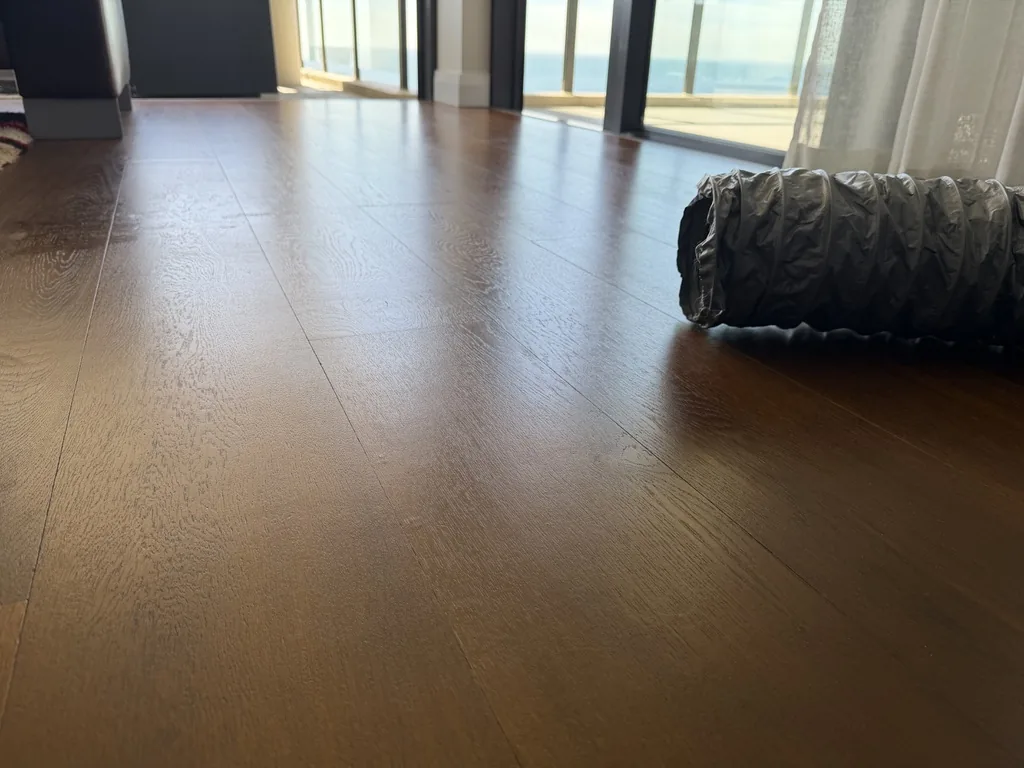
This was a high-end timber floor — the kind that costs tens of thousands of dollars to pull up and replace, before you even count the disruption of moving people out while it’s done. By getting in early and drying it in place, we brought it back to a dry, stable standard without replacing a single board.
That’s the saving that matters: not just the drying bill versus a replacement bill, but a household that stayed in their home and a floor that looks like nothing ever happened.
Why there was no mould
Mould needs moisture and time. Take the moisture away quickly enough and it never gets started. Because the water was extracted and the structure dried fast, this job never became a mould job — no mould remediation, no strip-out, no ripping out wet materials. The speed didn’t just save the floor; it stopped a second, larger problem before it could begin.
The lesson: fast beats everything
There’s a simple takeaway here for anyone who owns or manages a property. When water gets in, the single biggest factor in what it ends up costing you is how quickly a professional drying crew is on site. A fast call and a fast response turned what could have been a $30,000-plus floor replacement and a mould clean-up into a controlled dry-out — and a genuine good-news story.
We’re built for exactly this: the extraction and drying equipment to dry structures in place, thermal imaging to find and verify moisture, and a crew that answers the phone 24/7 across Brisbane, Redcliffe and the bayside.
General information only — every property is different, and nothing here replaces a professional, on-site assessment.