Water · Category — how contaminated: 1 Clean · 2 Grey · 3 Black (grossly contaminated)
Water · Class — how much to dry: 1 part of a room · 2 whole room, water up walls under 24" · 3 saturated from overhead, up walls over 24" · 4 specialty — hardwood, plaster, masonry, bound-in moisture
Mould · Condition: 1 normal · 2 settled spores · 3 active growth
- Location
- North Lakes, north of Brisbane
- Event
- Hidden pipe leak behind the shower head — inside the wall
- Misdiagnosed
- Blamed on the shower for ~3 years
- Water path
- Under the shower membrane, into the floor cavity & the living/dining below
- Our scope
- Condition 3 mould remediation · complete shower strip-out · structural drying
- Outcome
- Mould contained to the shower base & lower walls — a major floor-void strip-out avoided
Some of the most expensive water damage we see doesn’t come from a burst pipe or a storm. It comes from a slow leak that everyone got wrong. At a home in North Lakes, a bathroom problem had been put down to a “leaking shower” for about three years. It wasn’t the shower. It was a pipe leaking behind the shower head, inside the wall — and three years of slow water had done a lot of quiet damage.
The “leaking shower” that was a hidden pipe
For three years the fix kept chasing the shower — the seals, the screen, the grout. But the leak never stopped, because the water wasn’t coming from the shower. A pipe behind the shower head was weeping inside the wall cavity, out of sight, feeding water into the structure day after day. Until someone looks in the right place, no amount of re-sealing a shower will fix a pipe leaking behind it.
Three years of slow water
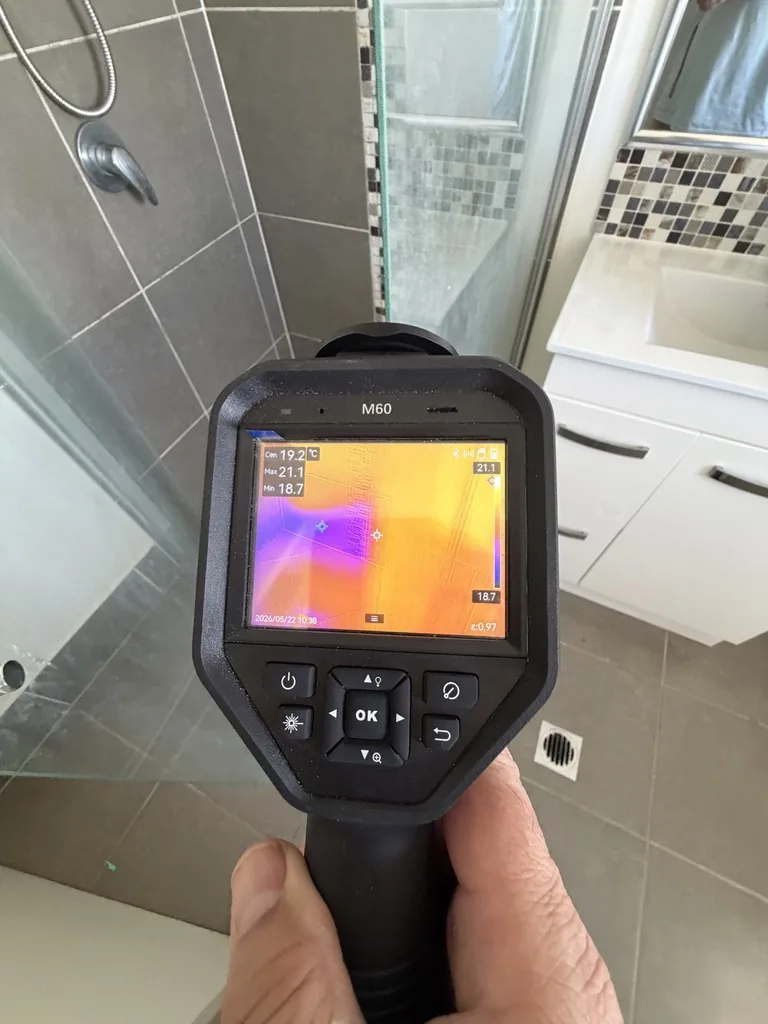
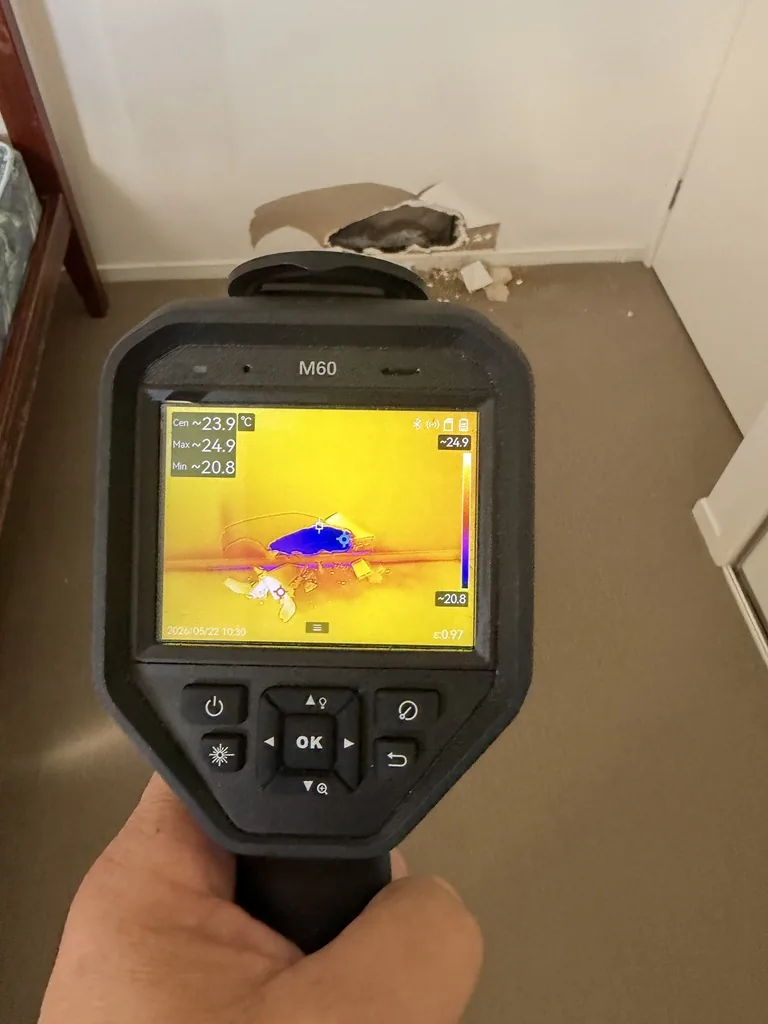
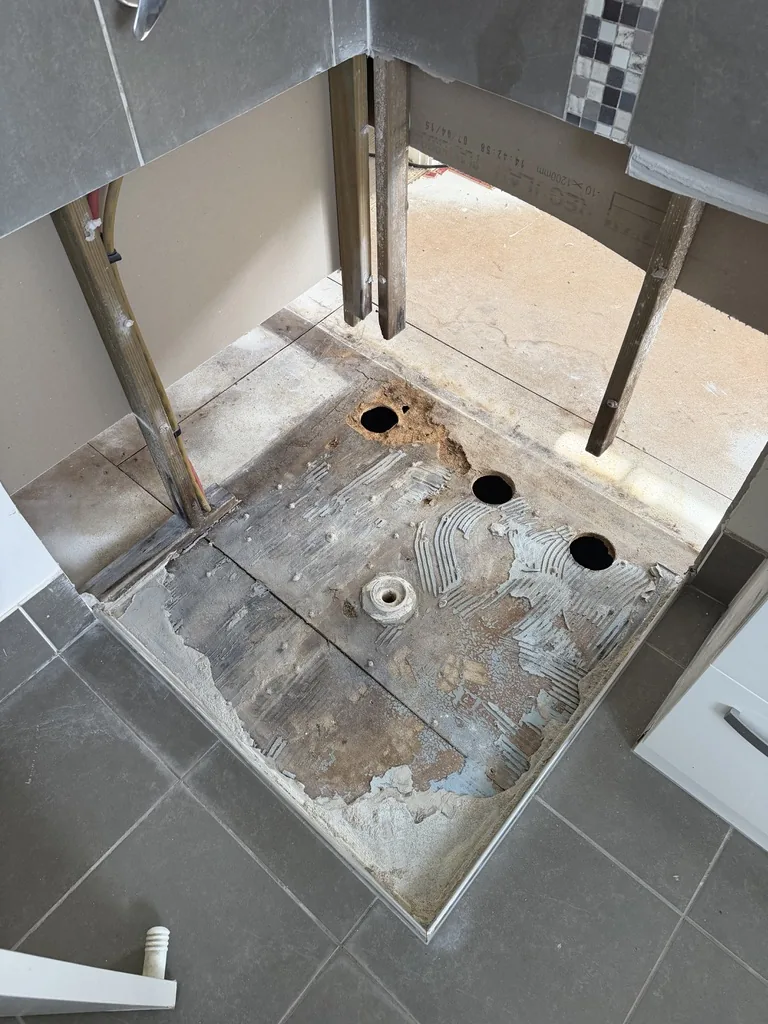
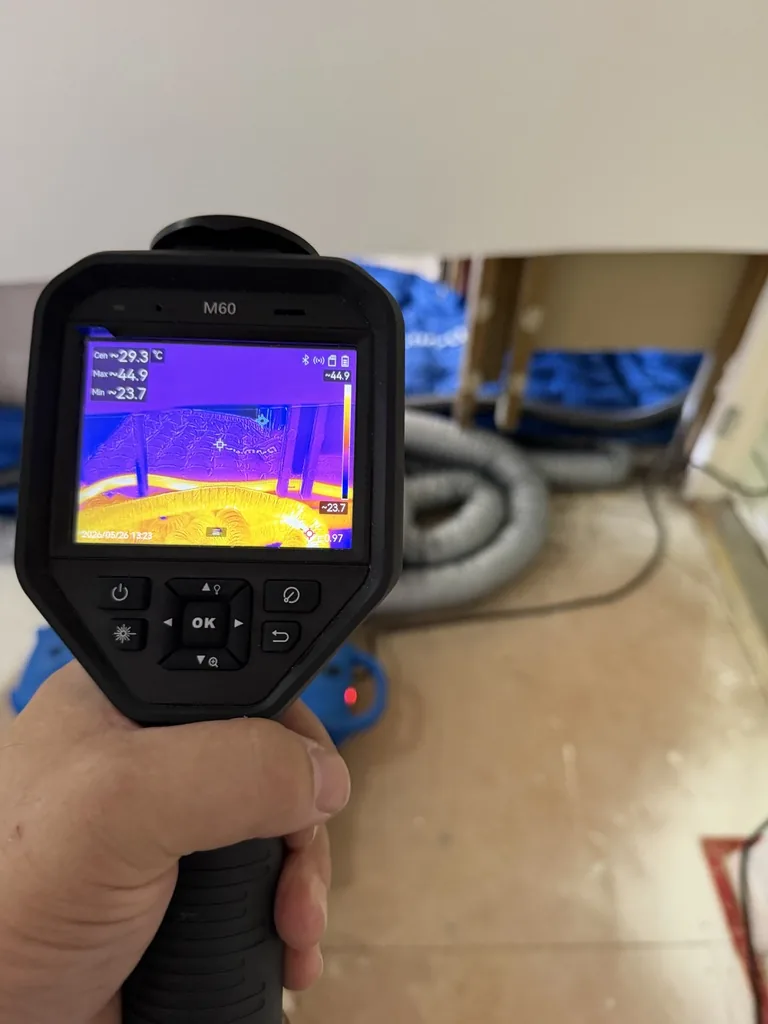
This was never a dramatic flood — and in its own way that’s worse. A slow leak, left long enough, gets everywhere. Here the water had soaked down under the shower base membrane, run into the floor cavity, and tracked through to the ceiling and the living and dining areas below. On the thermal camera you could see it: cool patches spreading well past the bathroom, and a section of ceiling that had finally given way where the water had been pooling.
Condition 3 mould
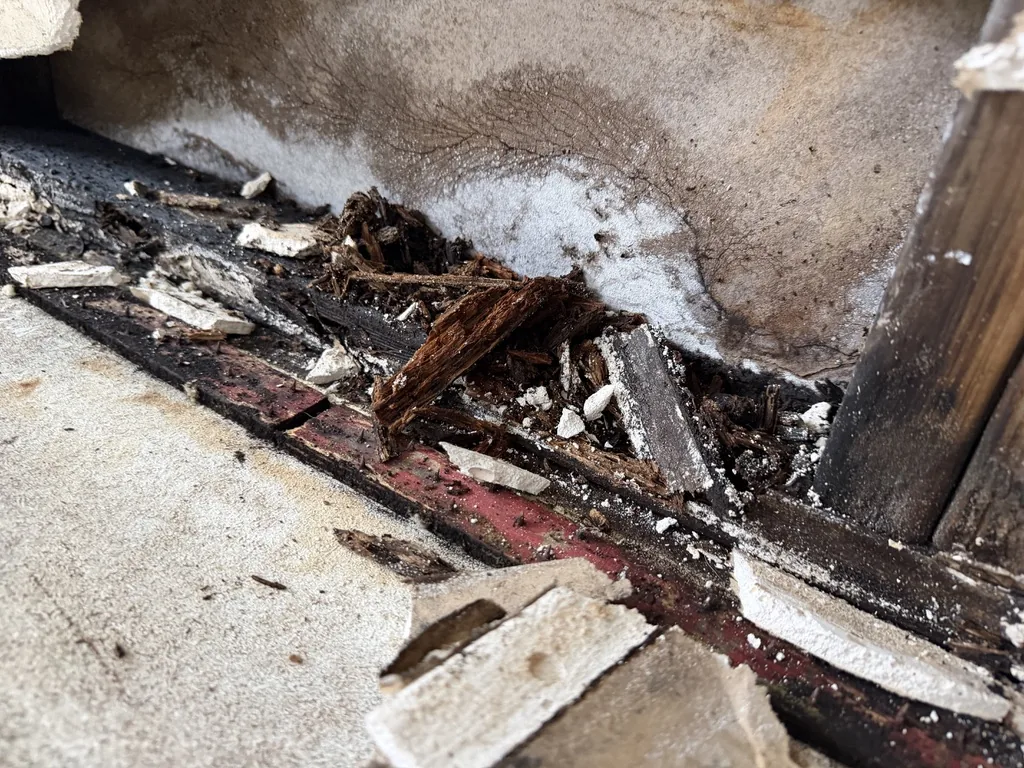
Three years of trapped moisture does what trapped moisture always does. There was active mould growth — a Condition 3 contamination — through the shower base and the bottom of the walls, with the timber framing wet and rotting where the water had been sitting the longest.
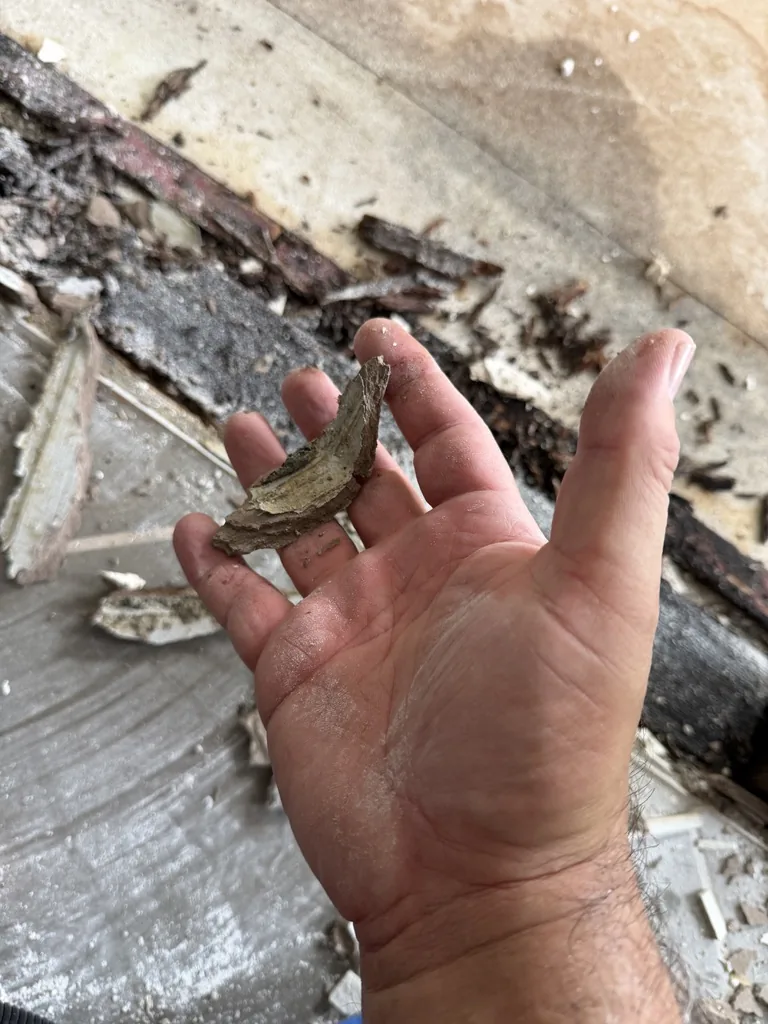
The one piece of good news was containment. The mould had stayed largely in the shower base and the lower walls and had not taken hold through the floor void itself. That mattered enormously: had it spread into the floor structure, this would have been a far bigger, whole-area strip-out.
The job: contain, strip out, remediate, dry
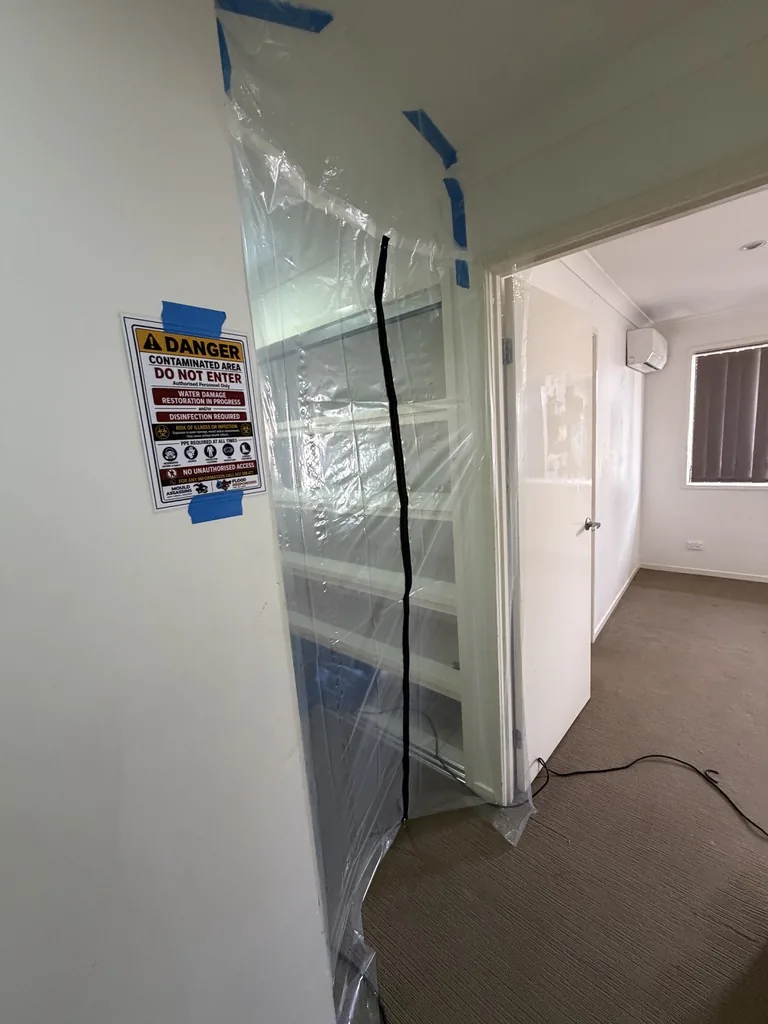
We contained and sealed the area first — this is Condition 3 mould, and you don’t open it up and let spores travel through the rest of the home. From there: a complete strip-out of the shower (the water sitting under the membrane left no other option), mould remediation of the affected base and wall framing, and then the drying.
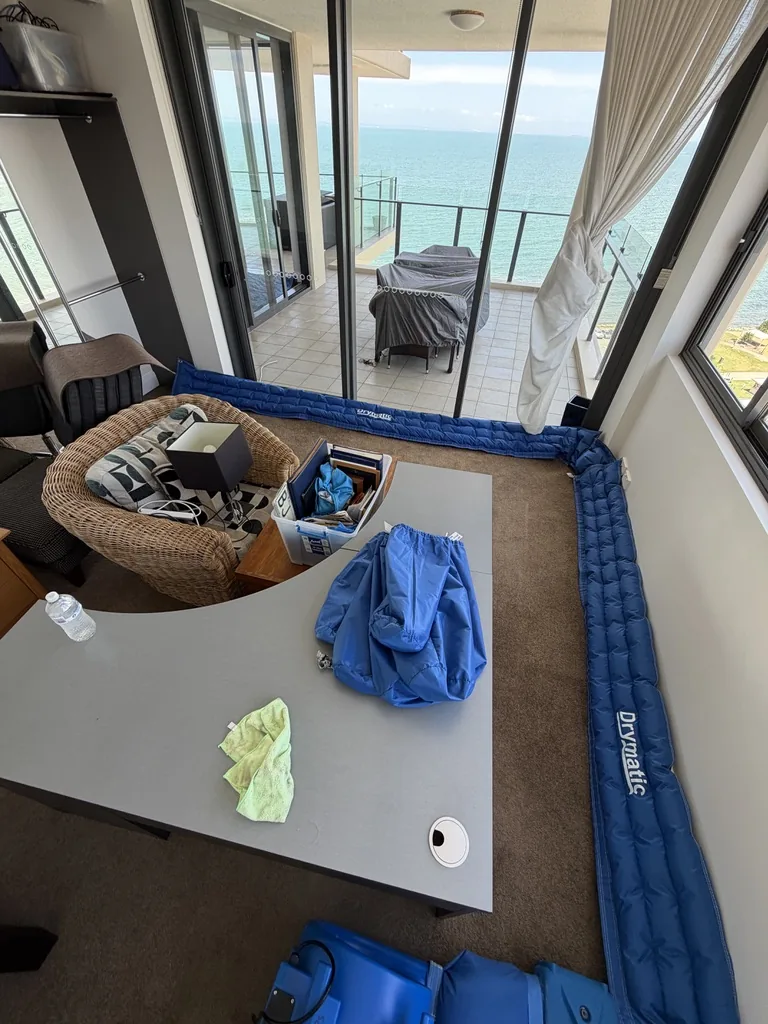
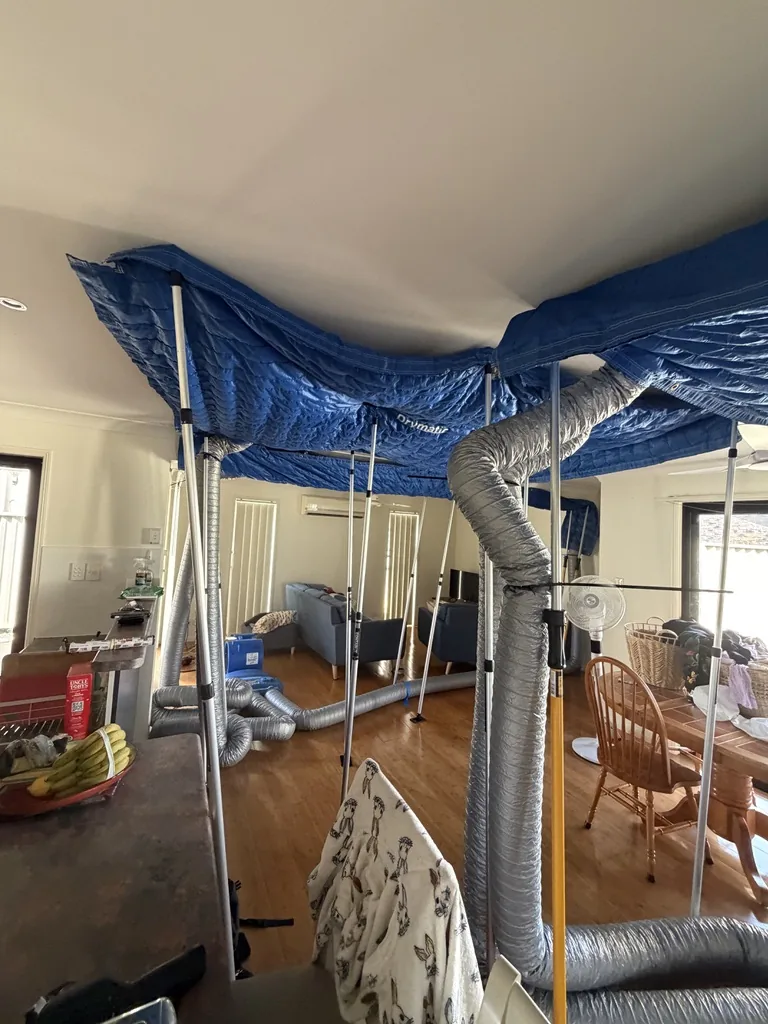
Because the water had reached the floor structure, drying meant getting heat into the places you can’t see. We ducted warm, moving air straight into the floor void to dry the joists from the inside, and dried the stripped bathroom in place — monitoring the moisture until the structure was back to a proper dry standard.
The lesson: find the real leak before it finds your floor
This is the same lesson as so many of these jobs, and it’s worth repeating: a slow, hidden leak that’s misdiagnosed does more damage than a fast one, precisely because nobody treats it as an emergency. Three years of chasing the wrong thing turned a pipe repair into a mould remediation, a shower strip-out and a structural dry-out.
If a “leaking shower” keeps coming back no matter how many times it’s re-sealed, the shower probably isn’t the problem. Get the real source found — properly, with moisture meters and thermal imaging — before it quietly works its way into your floor. We’re set up for exactly that across Brisbane and the northern suburbs, 24/7.
General information only — every property is different, and nothing here replaces a professional, on-site assessment.