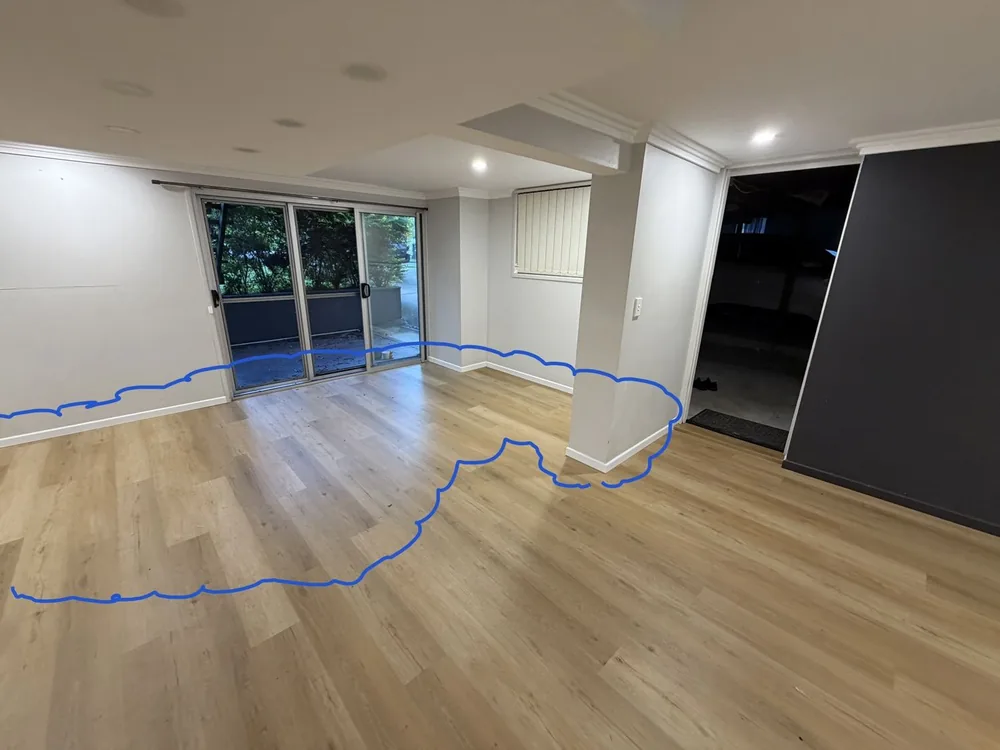
SPC (stone plastic composite) and vinyl plank are sold as waterproof, and the surface layer is. But when water gets beneath the floor — from a leak, a spill or rising damp — that same waterproof surface traps the moisture where it can’t evaporate.
The result is moisture sitting in the underlay, adhesive, subfloor or slab, with nowhere to go. Fans and dehumidifiers can’t reach it while the floor is down.
What that leads to
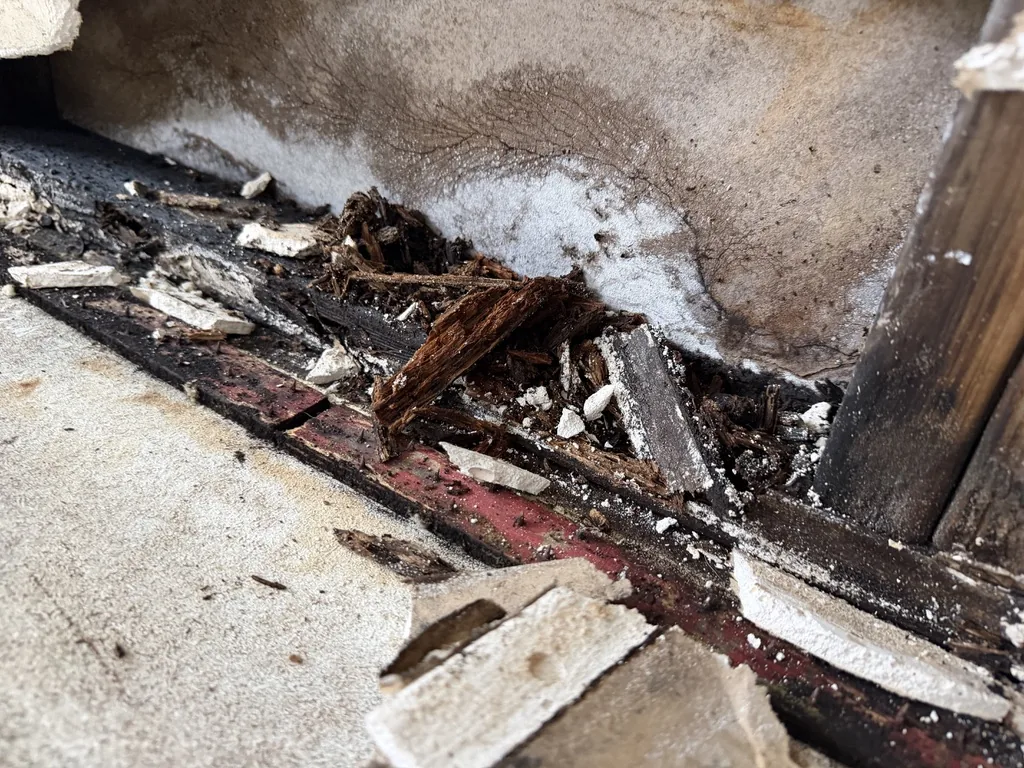
Left in place, trapped moisture causes mould beneath the flooring and inside wall cavities at floor level, plus flooring failure — edge lifting, joint separation and cupping — and slow, costly secondary damage the longer it sits.
How the call is made
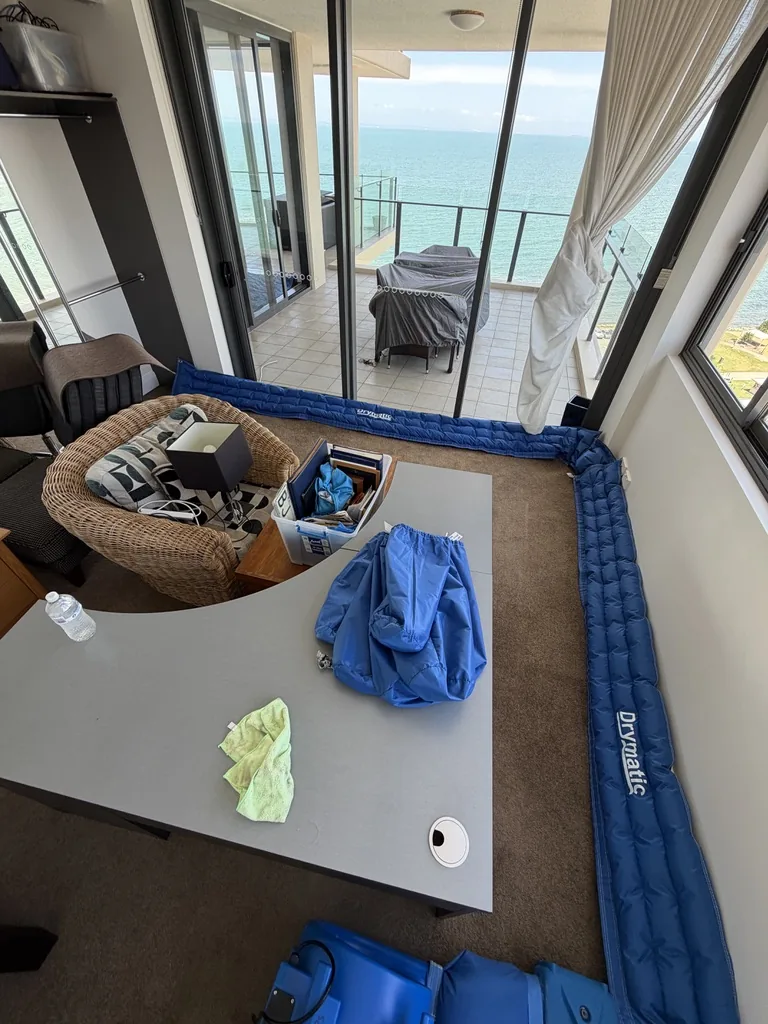
Whether the floor needs to come up depends on how long the water has been there, the water category, how far it has migrated and how the floor was installed. Professional moisture mapping — non-invasive meters, probes and thermal imaging — tells us what’s wet before anything is lifted, so removal is a decision based on readings, not guesswork.
General information only — every property is different, and nothing here replaces a professional, on-site assessment.