Water · Category — how contaminated: 1 Clean · 2 Grey · 3 Black (grossly contaminated)
Water · Class — how much to dry: 1 part of a room · 2 whole room, water up walls under 24" · 3 saturated from overhead, up walls over 24" · 4 specialty — hardwood, plaster, masonry, bound-in moisture
Mould · Condition: 1 normal · 2 settled spores · 3 active growth
- Location
- Bray Park, Moreton Bay
- The job
- Concealed leak — mould, rot & structural drying
- Root cause
- Long-running bath waste leak (misdiagnosed as the shower)
- Our scope
- Condition 3 strip-out, mould remediation & structural drying
This one is a lesson as much as a job. A home at the back of Bray Park had a persistent leak in the wet area — and by the time we were called in, a lot of money had already been spent in the wrong place.
The “shower leak” that wasn’t
The leak had been put down to the shower. On that diagnosis, a shower refurbishment was recommended and carried out. The problem: the leaking didn’t stop, because the shower was never the cause. Water kept getting into the structure, quietly, for a long time — while the owner had already paid to fix the wrong thing.
Finding the real source
The first job on any water issue is to find where the water is actually coming from — not where it looks like it is coming from. Using thermal imaging and moisture meters, we traced the moisture back to its real source: a leaking bath waste. It had been running for a significant amount of time.
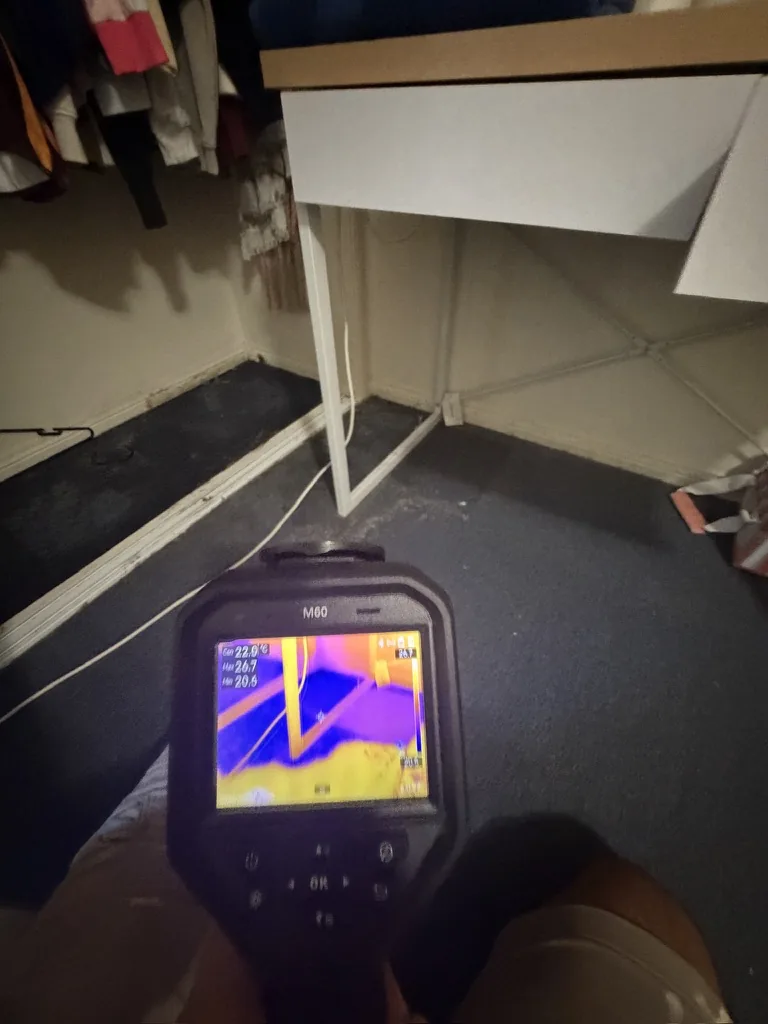
That single point is the whole story. The shower was never the problem. The refurbishment money was spent on the wrong fix while the actual leak kept running — and the damage kept growing.
What the leak had done
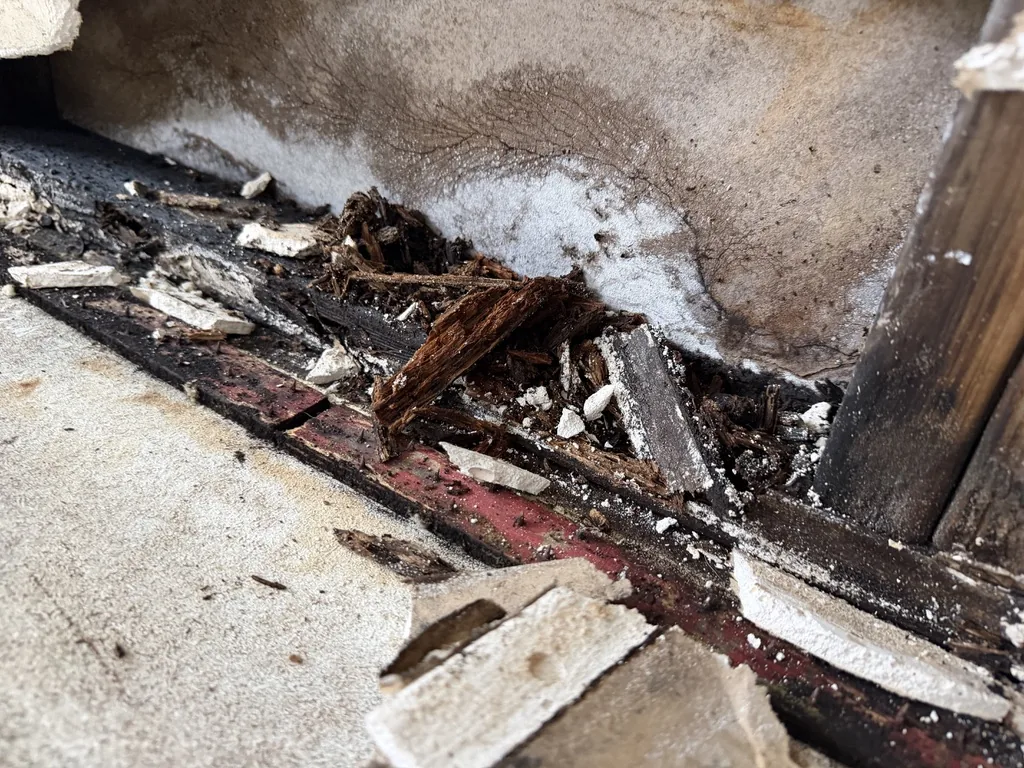
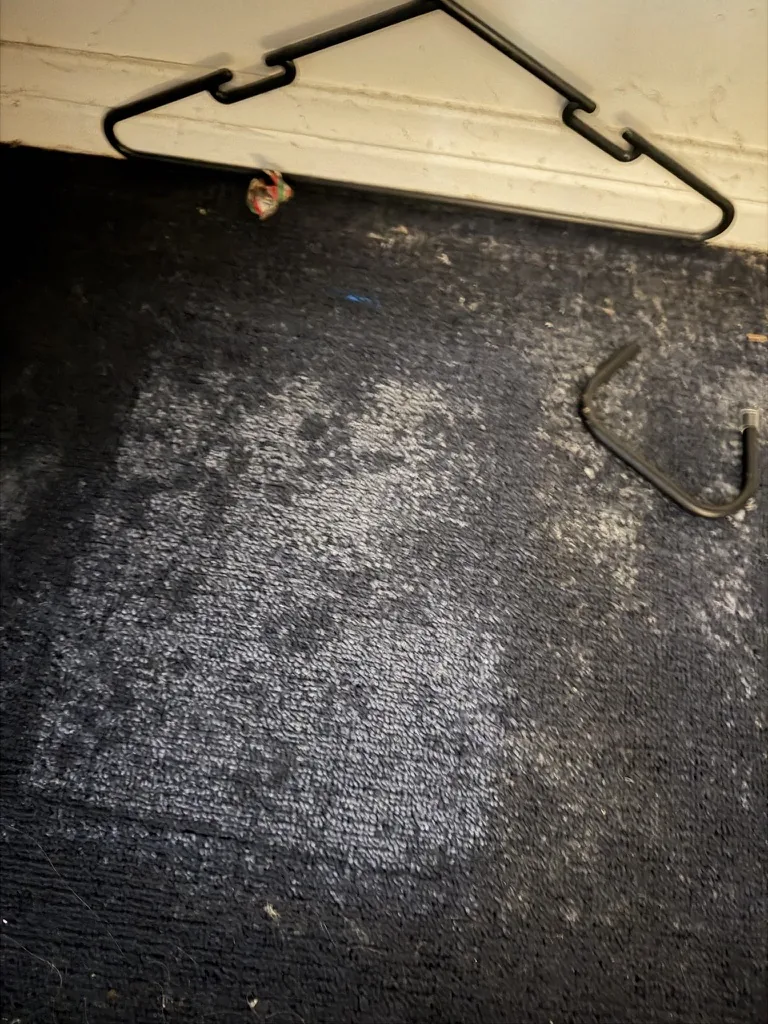
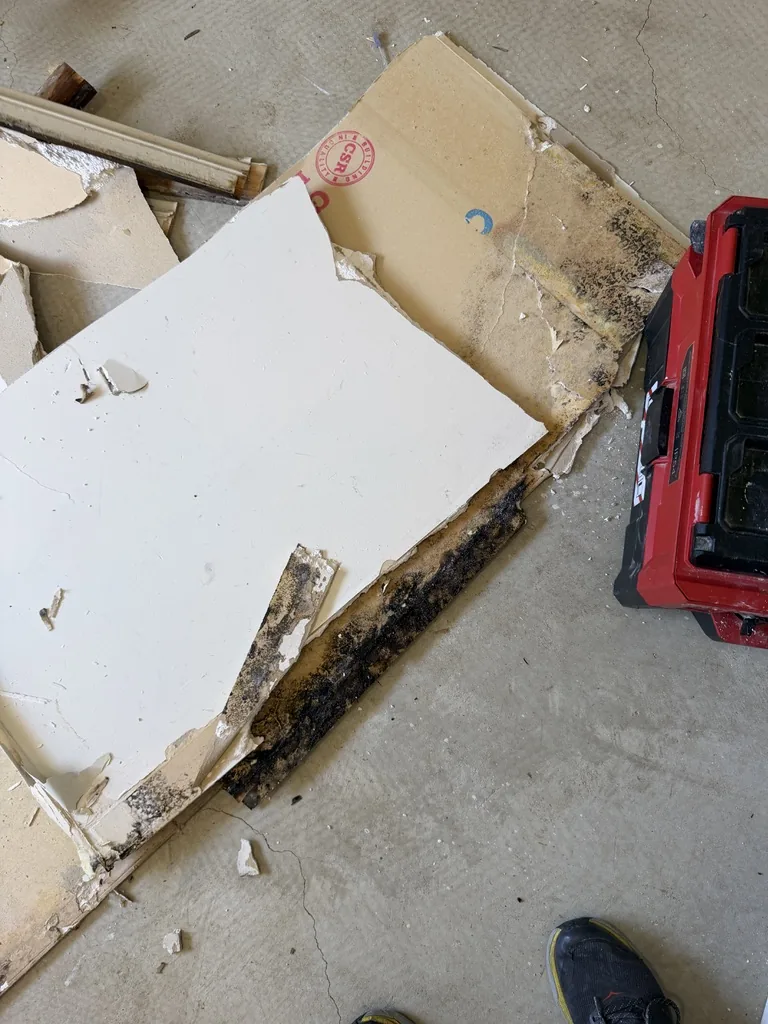
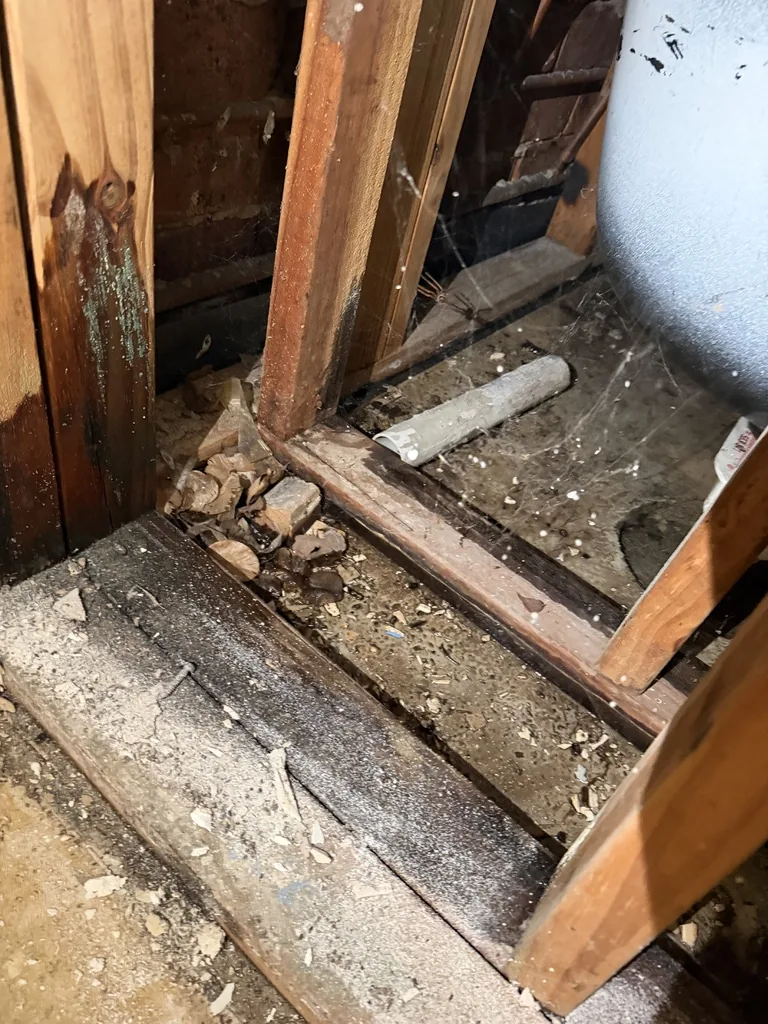
By the time the real cause was found, this was a Condition 3 job — severe, well-established contamination. The carpet was mould-affected and saturated. The walls were wet and, in places, rotten. The timber framing at the base of the wall had rotted, and mould had taken hold inside the wall cavity, where it had been dark, warm and wet for months.
The job: strip out, remediate, dry
Contamination at this level can’t be cleaned in place. In full PPE and under controlled, contained conditions, we carried out a Condition 3 strip-out — removing the affected carpet, the wet and mould-affected wall linings and the failed materials — and remediated the mould back through the exposed structure.
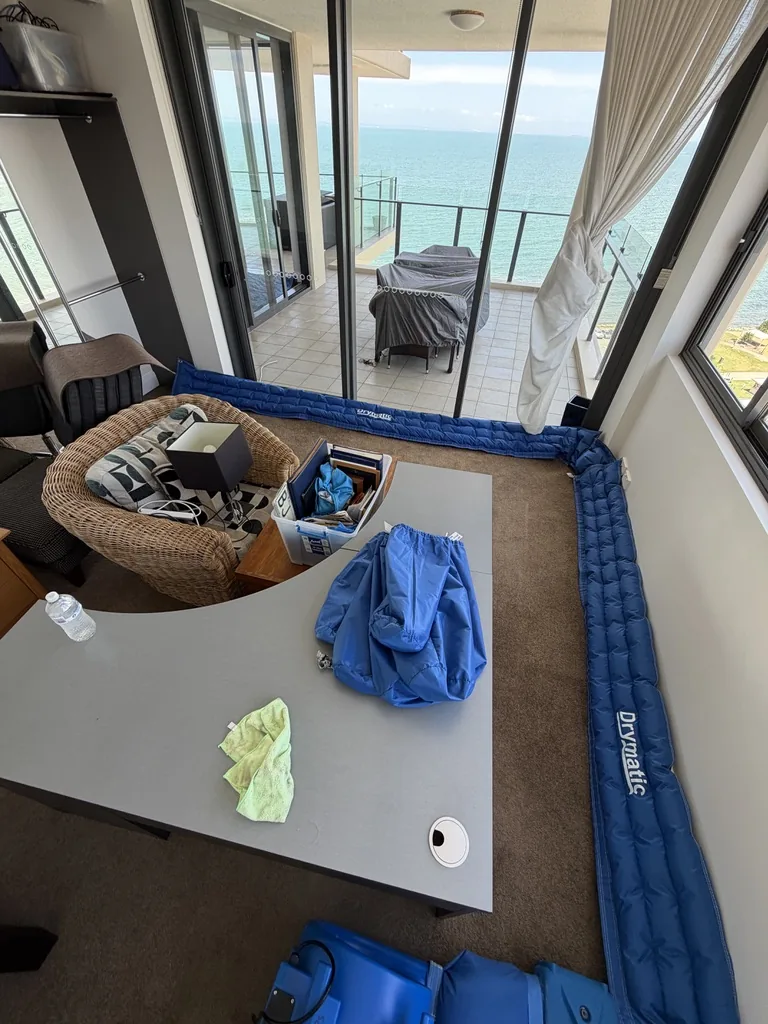
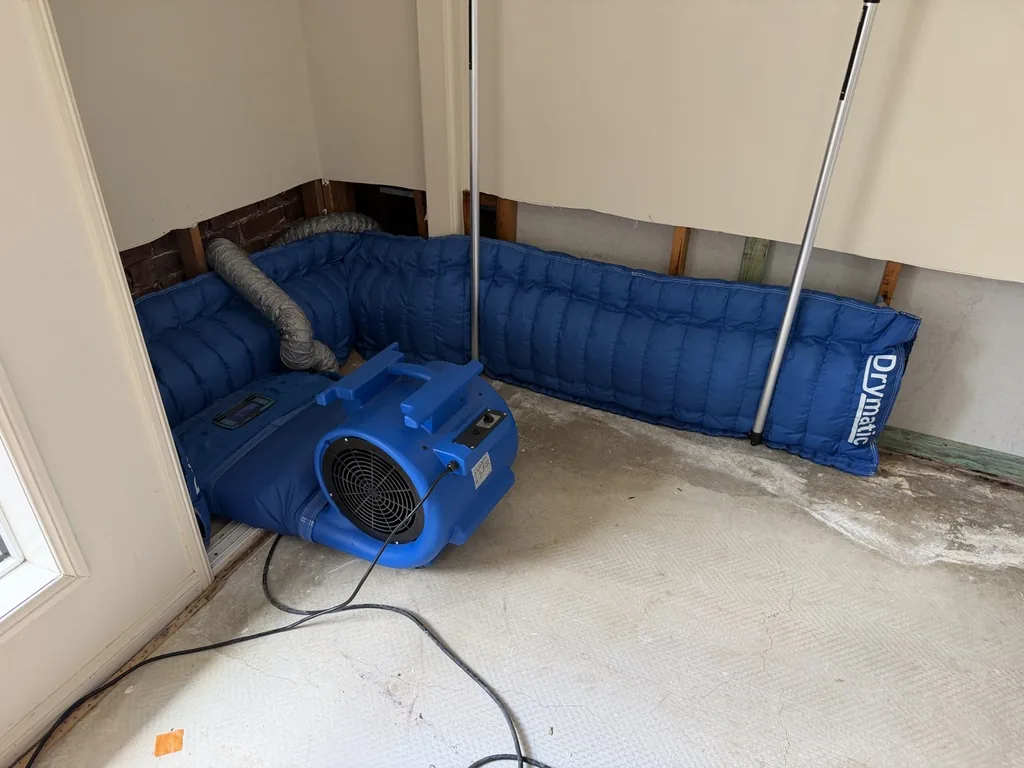
Then the part most people skip: proper structural drying. Pulling out the wet materials is only half the job — the timber, framing and slab still hold moisture that will feed mould all over again if it isn’t dried out. We set up targeted structural drying — ducted heat-drying blankets and air movers pushing warm, dry air through the affected structure — and monitored it with moisture readings until it was brought back toward a dry standard.
The lesson: diagnose the source before you spend
Here’s the takeaway, and it’s an expensive one. A misdiagnosed leak costs you twice — once for the wrong repair, and again for the damage that keeps growing while the real leak runs. In this case a shower refurbishment was paid for and the leak never stopped, because it was always the bath waste.
Before you spend money repairing or refurbishing around a leak, get the source properly diagnosed. Thermal imaging and moisture metering find where water is actually travelling — not where it appears to be — so the money goes on the right fix the first time. That’s the difference between a small, targeted repair and a full strip-out and dry-out. We’ve got the equipment, the technology and the training to find it and prove it.
Water damage in Brisbane’s north?
If you’ve got a leak, damp that won’t dry, or a repair that hasn’t fixed the problem, get the moisture properly traced before it becomes a strip-out. Flood Responders covers Bray Park, the Moreton Bay region and greater Brisbane — thermal moisture mapping, extraction, mould remediation and structural drying, with the documentation your insurer expects. As part of Integrated Property Care, Mould Assassins and 1HandyDad are on hand for the remediation and repairs too.
General information only — every property is different, and nothing here replaces a professional, on-site assessment.