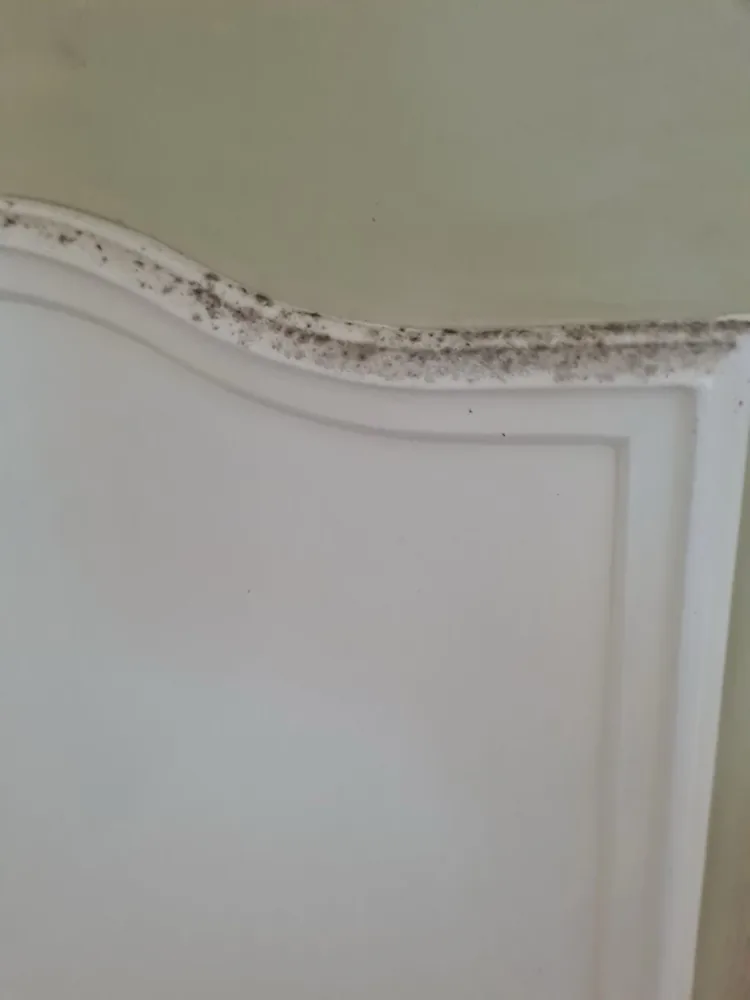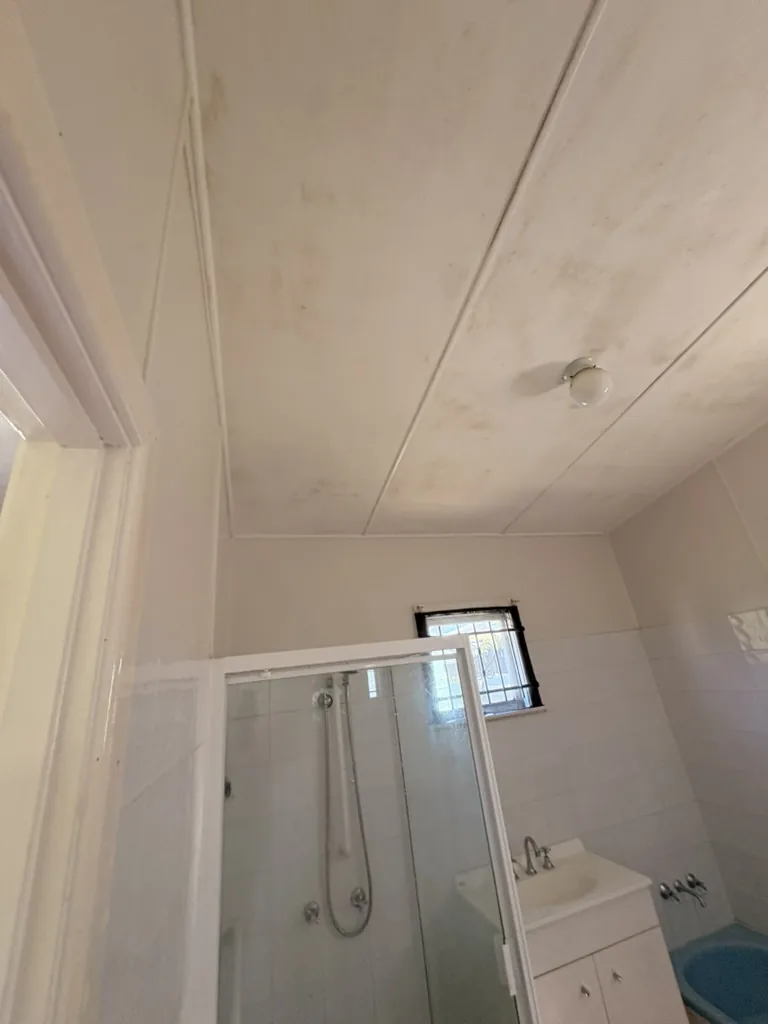
Mould · Condition: 1 normal · 2 settled spores · 3 active growth
- Location
- Clontarf, north of Brisbane
- Affected areas
- Bathroom & laundry — ceilings, walls, floors & fixtures
- Primary cause
- Limited / inadequate ventilation
- Building note
- Asbestos-affected linings
- Our scope
- Initial mould treatment & disinfection — prior to further works
Mould Assassins attended a home in Clontarf, on Brisbane’s northern side, after significant visible mould had taken hold in the bathroom and laundry. This was not a small patch in the corner of the shower. It had spread right across the ceilings, with spotting creeping down onto the upper walls.
It is one of the more dramatic examples we see — but the way it got there is one of the most common. Here is what we found, how we approached it, and the part most people miss: the cause.
What we walked into
The bathroom ceiling was covered with widespread mould growth across large sections, with staining and spotting extending well down the walls. The laundry told the same story — mould distributed across multiple areas of the ceiling. Where moisture had been sitting the longest, in the cool corners, it was heavy and well established.
And it wasn’t only the ceilings. Mould and settled contamination were noted across the walls and floors of both rooms as well. This was not a quick ceiling touch-up — it was a whole-room problem, in two rooms.
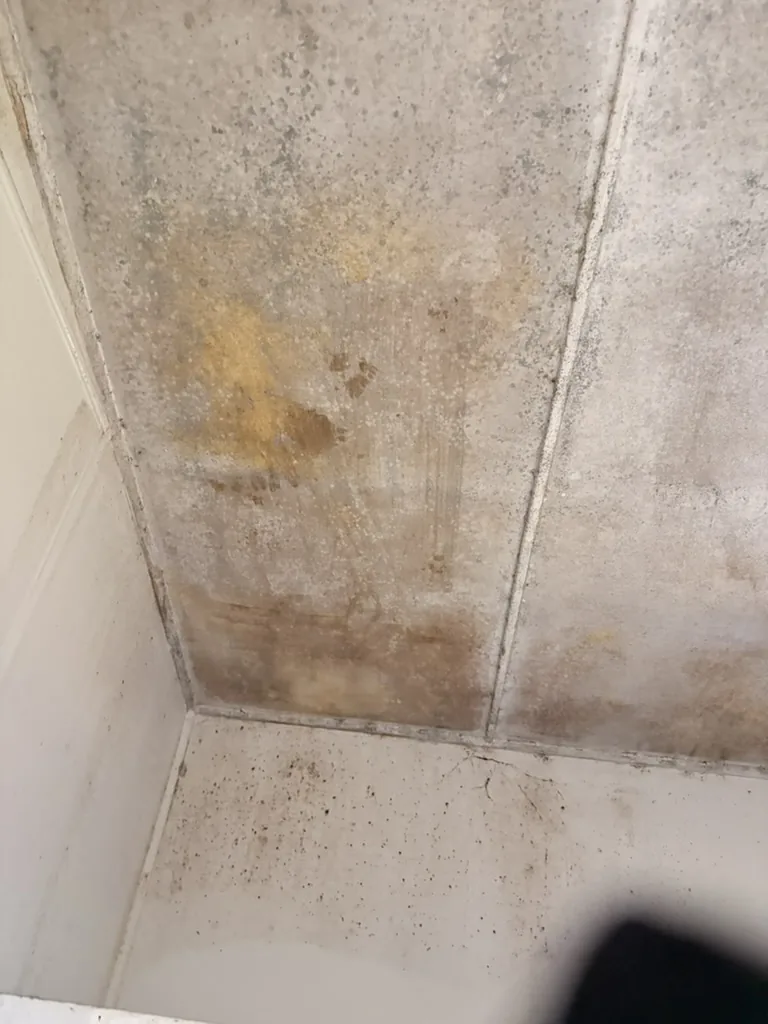
Mould like this doesn’t appear overnight. It is the sign of a room that has been damp, again and again, over months or years.
The cause: not enough ventilation
Bathrooms and laundries are moisture factories. Every hot shower puts litres of water into the air. Washing, drying and even mopping add more. In a well-ventilated room, that moist air is drawn out and replaced with drier air. In a room without enough ventilation, it has nowhere to go.
At this property, the affected rooms had limited ventilation. Moisture-laden air stayed put, humidity climbed, and it condensed on the coolest surfaces — the ceiling and the tops of the walls. Do that day after day and you have created the exact conditions mould needs. In our assessment, that lack of ventilation was the primary factor behind the contamination.
Why this isn’t a wipe-and-go job
At this scale, a supermarket spray does more harm than good. Household mould sprays bleach the colour out of the mould so the surface looks clean, while the growth and its spores are still there — and the moisture problem that caused it is completely untouched. A few weeks later, it is back.
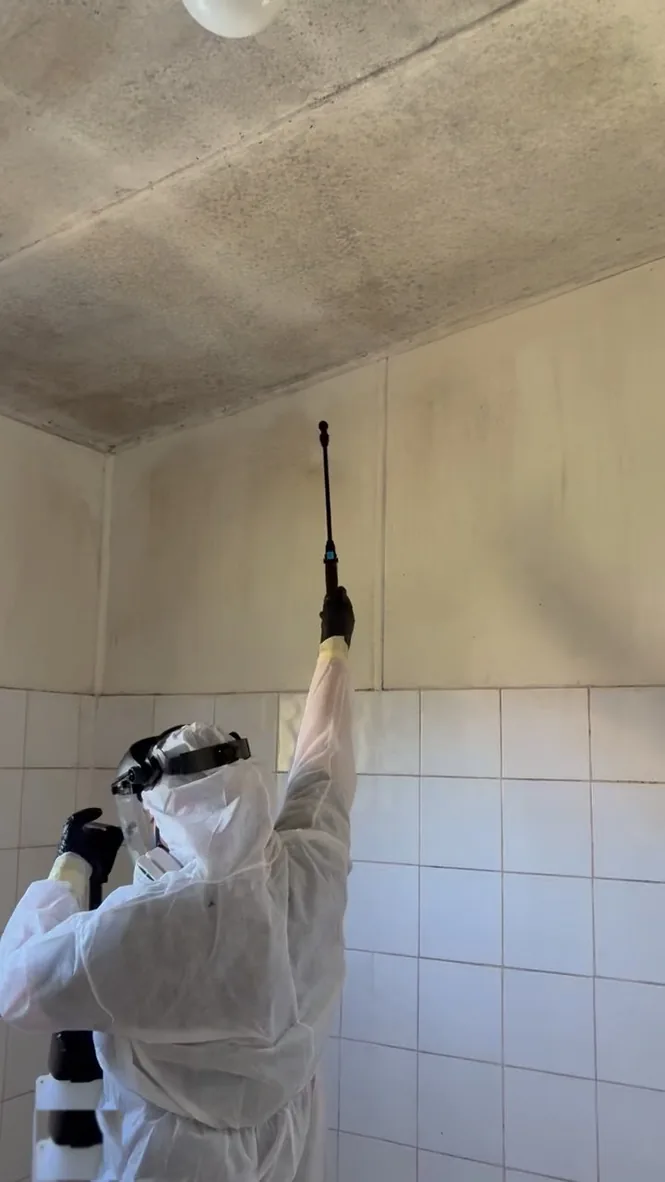
Widespread contamination like this needs a controlled, professional approach: the area contained so spores aren’t spread through the rest of the home, technicians in proper respiratory protection and suits, HEPA-grade extraction, and remediation-grade products made to treat mould at the surface — not a bottle from the laundry aisle.
The initial treatment we carried out
Our role on this job was an initial mould treatment and disinfection of the space. With the rooms contained and working in full personal protective equipment, we treated and cleaned all of the hard surfaces in both rooms — ceilings, walls, floors and fixtures — knocking the active mould and surface contamination right down in a controlled way. A proper first stage, not a quick spray-and-wipe of a ceiling.
The visible difference on the day was dramatic. The ceilings went from heavily mould-stained to visibly clean.
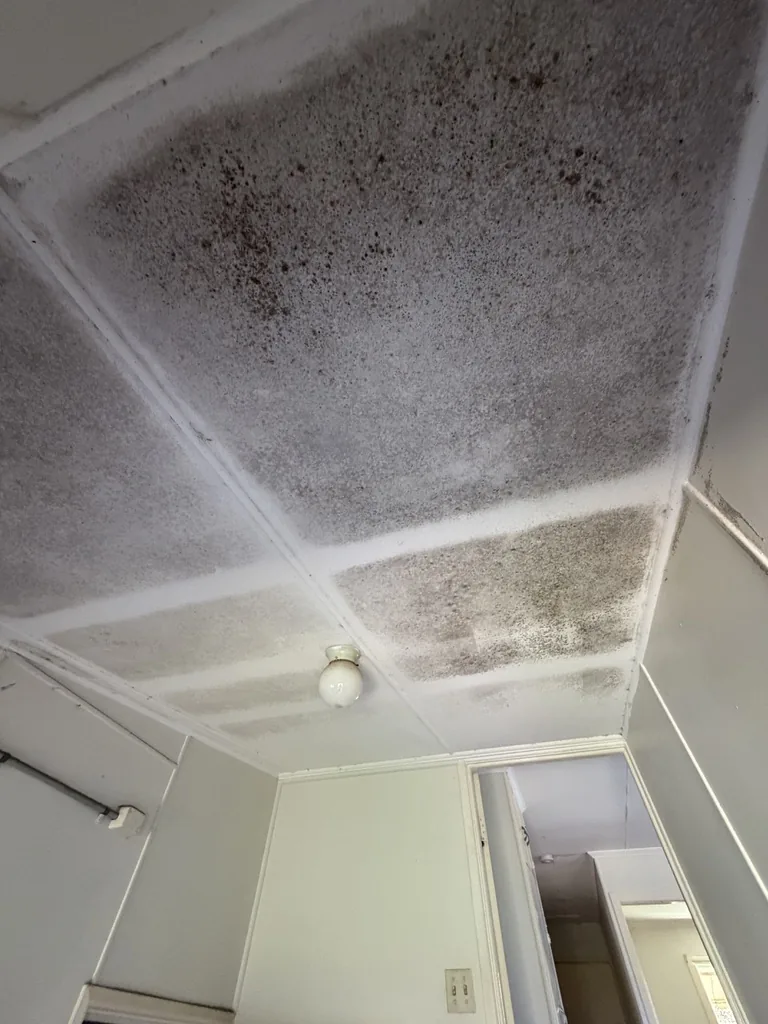 Before
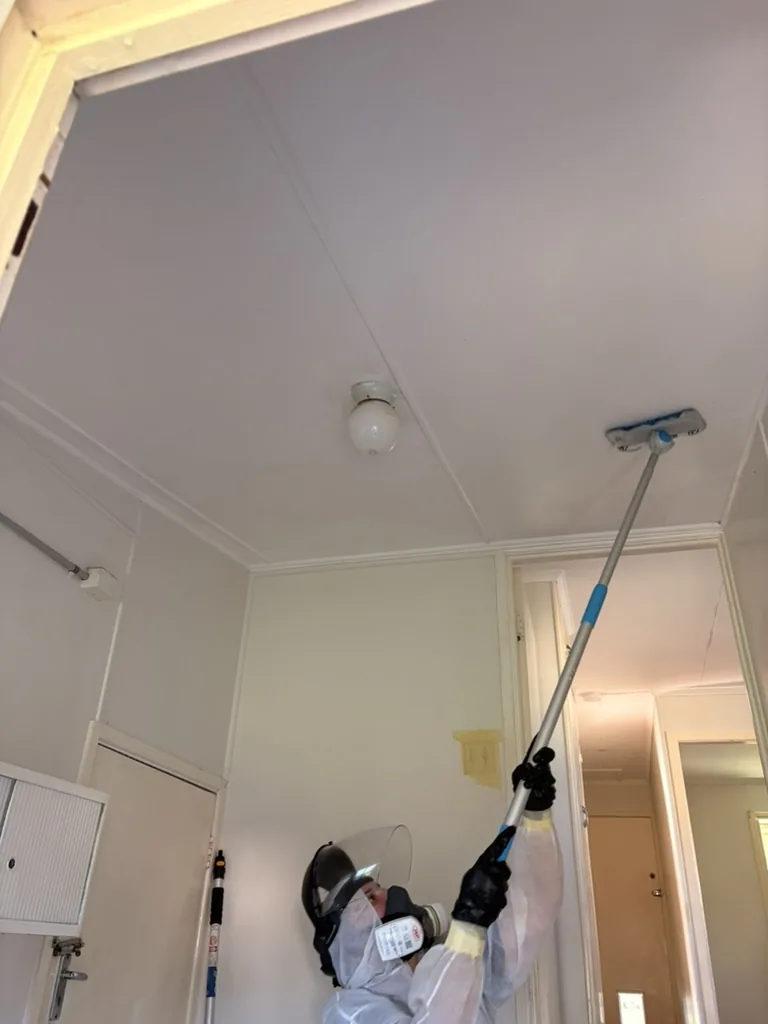 After
Why asbestos changes the job
This is an older home, and the affected ceiling and wall linings are asbestos-containing material. That matters, and it changes the correct order of operations. Asbestos must only be disturbed by licensed asbestos professionals — so aggressively stripping, sanding or cutting mould-affected asbestos sheeting is not an option, and it should never be attempted by a general mould or cleaning contractor.
So on a property like this, our job is the initial treatment and disinfection: bringing the active mould and surface contamination down in a controlled way, so the space is in a safer, more stable condition. The further works — any removal, encapsulation or repairs to the asbestos-affected materials, along with improving the ventilation — are then staged and completed under the appropriate licensed process. It is the responsible way to handle an asbestos-affected home, and it protects everyone involved.
Treat the cause, not just the mould
This is the part that matters most — and the part most people skip. Mould is almost never the real problem. It is a symptom. The real problem here was moisture with nowhere to go.
You can clean a ceiling perfectly and paint over it, but if the room still can’t clear its moisture, the mould comes back. So alongside the treatment, the lasting fix is about the conditions in the room:
Run an exhaust fan that actually vents outside — not one that just pushes damp air into the roof space — and leave it running during and for a while after every shower. Open a window where you can. Keep air moving so surfaces aren’t left cold and wet. And deal with any leaks or ongoing condensation, because they quietly feed the same cycle.
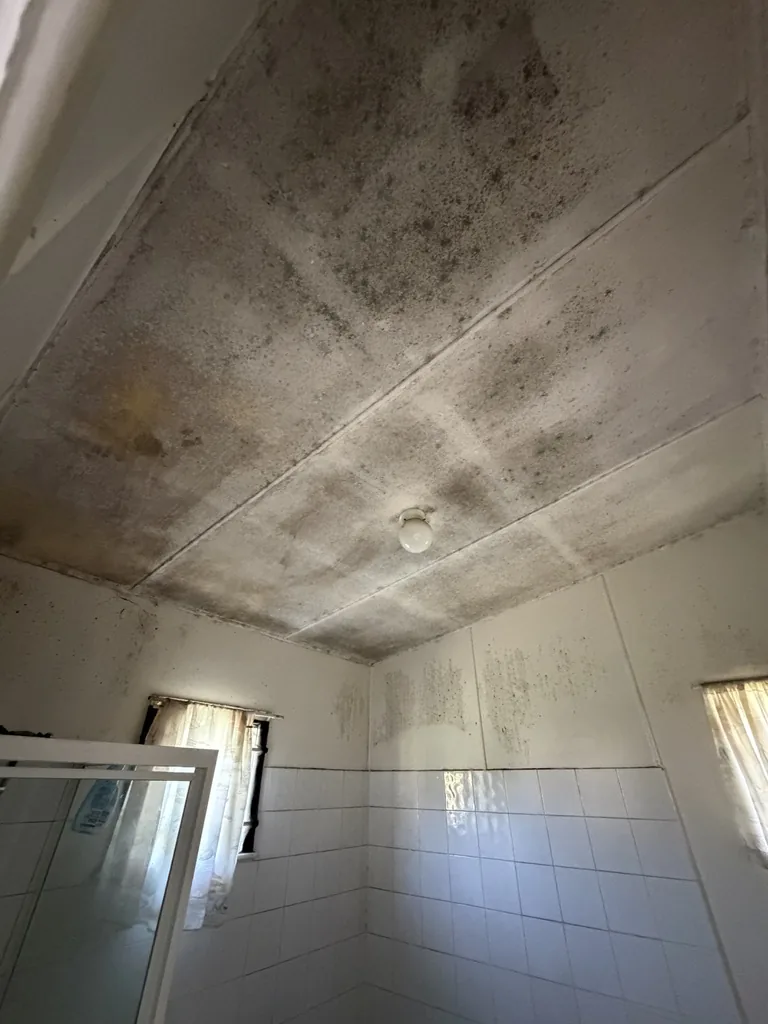 Before
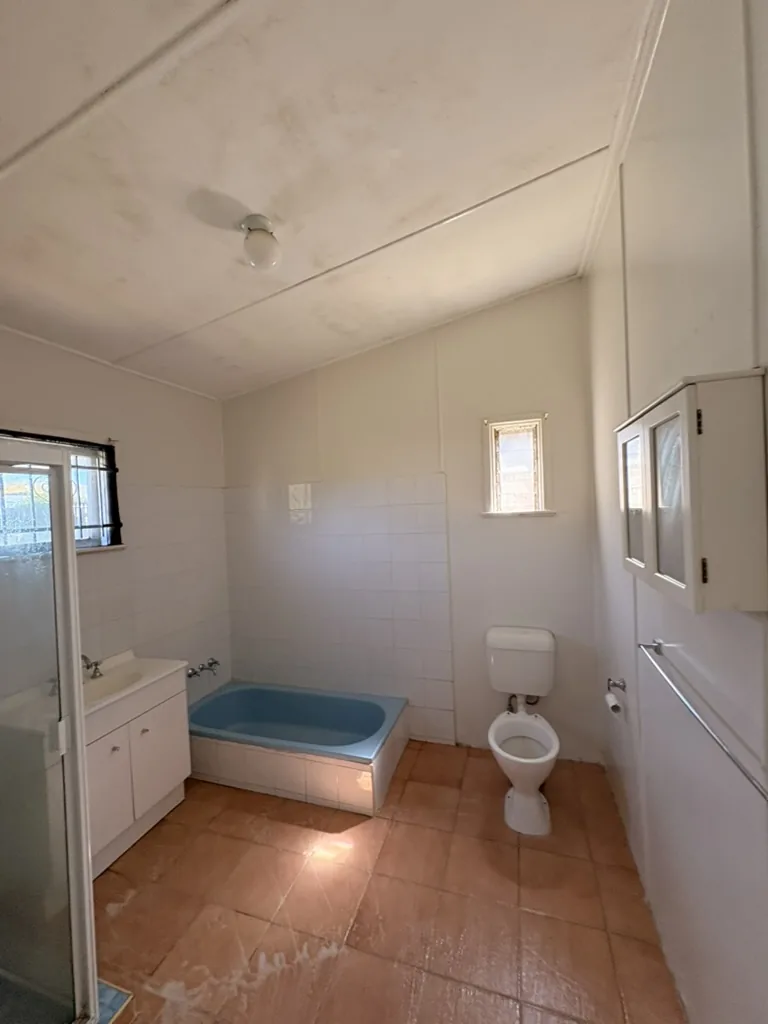 After
For bathrooms and laundries, getting the ventilation right is just as important as the remediation itself. Skip it, and you are booking the next clean.
Seeing mould like this in your place?
If mould keeps coming back on a bathroom or laundry ceiling, if there’s a musty smell, or if the exhaust fan never really clears the steam, the surface is telling you about a moisture problem behind it. Don’t just paint over it.
Find the moisture. Understand the cause. Treat the mould properly. Mould Assassins provides mould assessment and remediation across Clontarf, the Redcliffe Peninsula and greater Brisbane — and as part of Integrated Property Care, we can bring in Flood Responders or 1HandyDad if the job needs water-damage or repair work too.
General information only — every property is different, and nothing here replaces a professional, on-site assessment.